


Most business growth strategies sound simple on paper. Enter a new market, sell more to existing customers, raise margins, and so on.
The harder part starts after you choose the strategy. Your systems may not support the new market. Your team may still move data between different tools. Your ecommerce platform may block a workflow you need. A process that worked at $5 million in revenue can become a bottleneck at $20 million.
That is when your software stack can start limiting the strategy you want to execute. This guide looks at five business growth strategies and the operational problems they can create as the company expands. For each one, we’ll look at where standard software starts to fall short and when working with a software development company can make sense.
Blue Ocean Strategy: Create New Market Space
Cirque du Soleil didn’t beat Ringling Bros. by becoming a better traditional circus. It changed the offer. No animals, no star performers, no three-ring format. Instead, it combined theatre, music, and circus performance and charged premium prices. Within 20 years, Cirque du Soleil had reached revenues that Ringling Bros. and Barnum & Bailey took more than a century to achieve, a classic example of the Blue Ocean approach.
That is the core idea behind Blue Ocean Strategy: create new market space instead of competing for the same customers on the same terms.
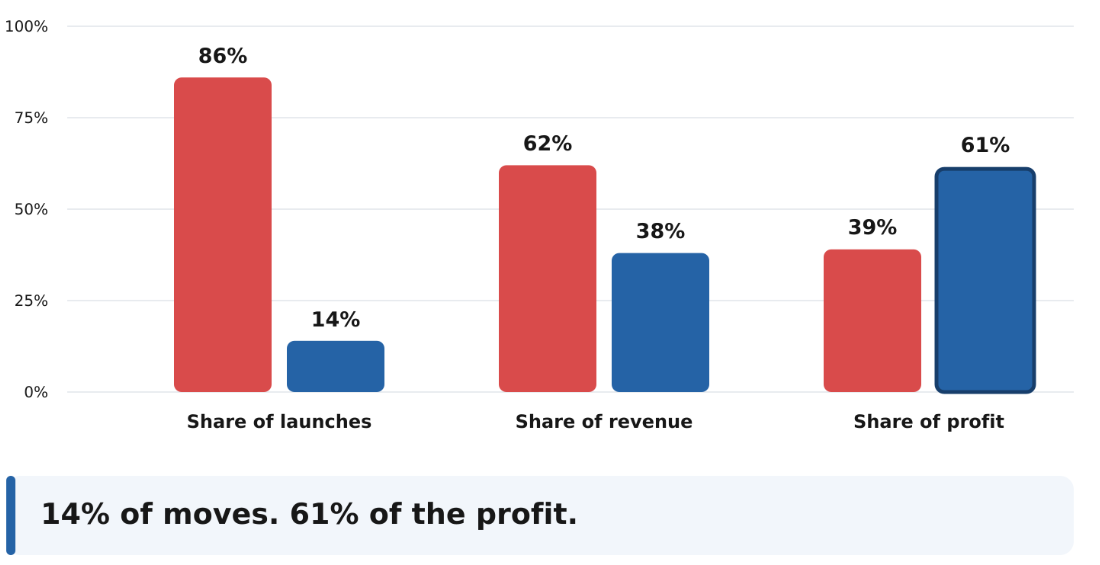
Kim and Mauborgne studied 108 business launches and found that 86% were line extensions in existing markets. They generated 62% of total revenue but only 39% of total profits. The other 14% created new market space, generating 38% of revenue and 61% of total profits, according to their original Blue Ocean Strategy research.
The real challenge comes next: making that different offer work inside the business. New pricing, sales processes, customer experiences, and operational workflows may all need to change. That is where the strategy starts putting pressure on existing systems.
Ansoff’s Growth Matrix: A Framework for Calculated Growth
Your product sells well at home. Then demand starts coming from countries you have never shipped to. Suddenly, the growth plan involves new currencies, languages, tax rules, pricing models, and customer segments.
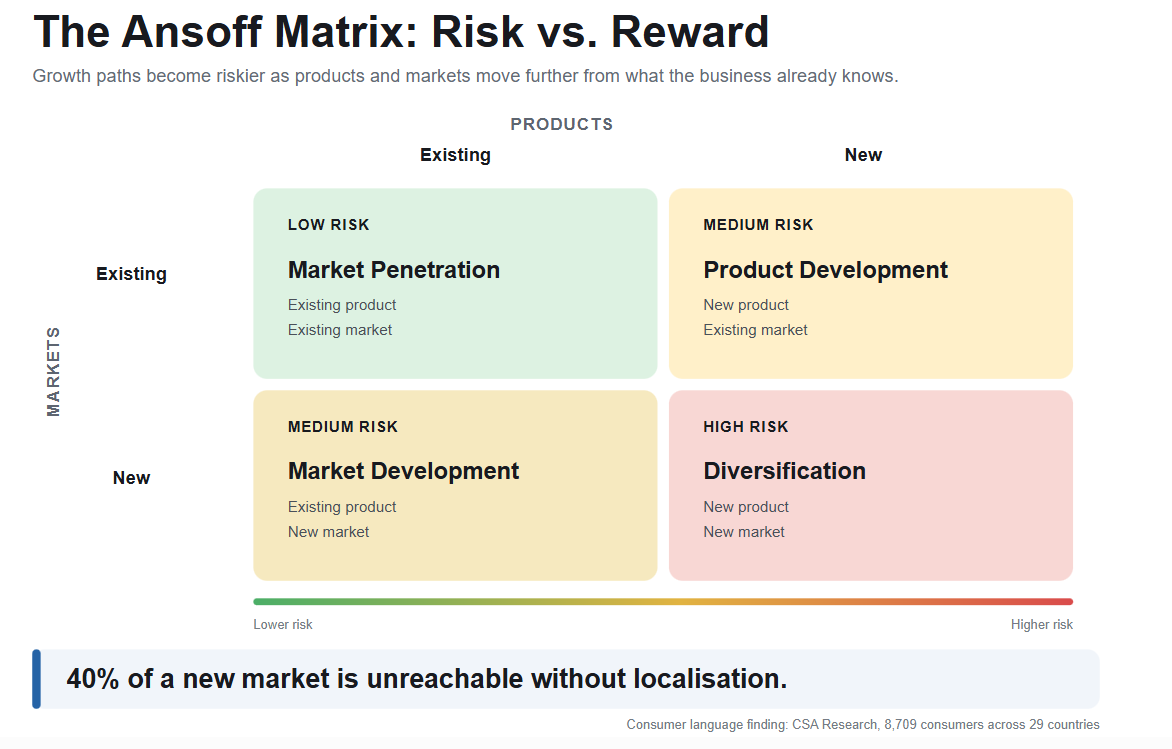
That is where the Ansoff Growth Matrix becomes useful. It outlines four business growth strategies: market penetration, market development, product development, and diversification. The first focuses on selling more in existing markets, while the other three involve entering new markets, creating new products, or doing both.
The moment a business enters another market, the same system needs to handle new languages, currencies, pricing rules, and customer expectations. CSA Research found that 76% of consumers prefer product information in their own language, while 40% will not buy from a website in another language.
The marketing challenge is making the offer feel relevant in the new market. Adapt messaging, pricing, channels, partnerships, and customer acquisition around local demand. Test the positioning first, then scale the channels and campaigns that generate real traction.
Strategic Account Management: Retain High-Value Clients
Not every customer deserves the same account strategy. Your largest accounts bring more revenue, demand more from the business, and can have a much bigger effect on retention and long-term customer value.
That is where Strategic Account Management (SAM) comes in. Instead of putting every customer through the same sales and service process, SAM gives high-value accounts more focused support, account planning, pricing, and customer service.
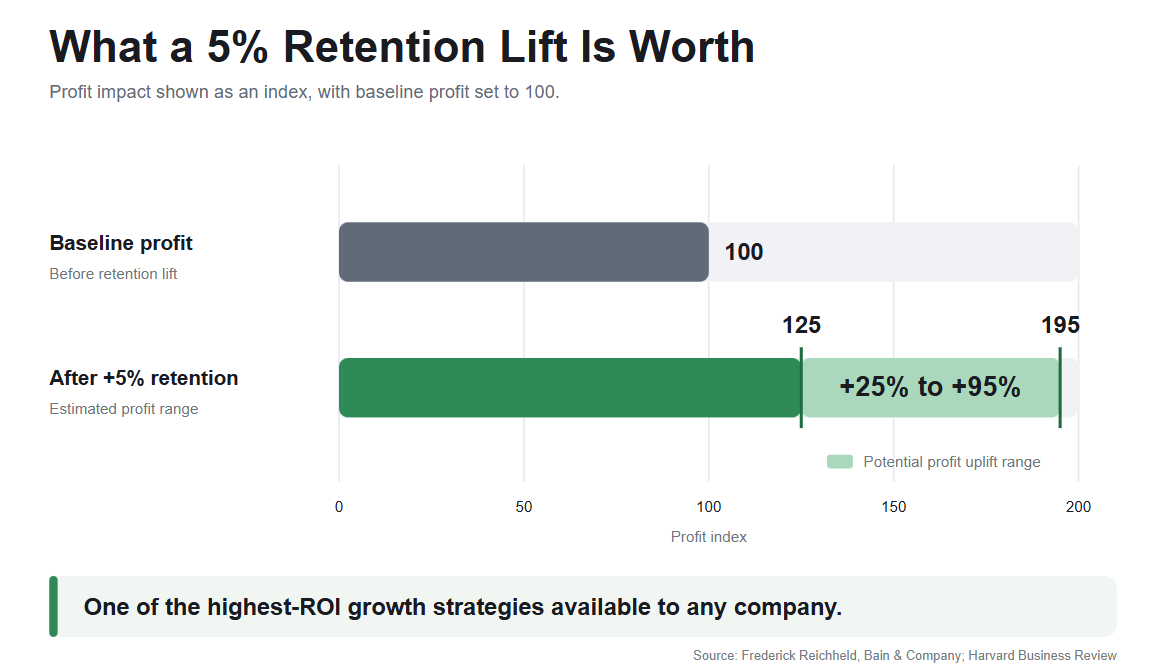
The financial case for retention is strong. Research by Frederick Reichheld of Bain & Company found that a 5% increase in customer retention can increase profits by 25% to 95%, depending on the business. The Pareto Principle also offers a useful lens: a relatively small group of customers can account for a large share of revenue or profit.
Start by identifying accounts based on profit contribution, lifetime value, growth potential, and strategic importance, not revenue alone. Then give those customers the systems their relationship actually requires: negotiated pricing, account-specific catalogs, reorder workflows, contract-aware quoting, procurement tools, and a unified customer record.
A standard CRM can handle the basics. But once key accounts need workflows that match your service model, a custom CRM solution can connect sales, pricing, customer service, contracts, and account data in one system.
4. “More-for-More” Premium Positioning: Compete on Value, Not Price
Rolex, Rolls-Royce, and Steinway do not position themselves as low-price alternatives. Their model is More-for-More: give customers more value, a stronger experience, or a better product, then charge a premium for it. As a business growth strategy, the goal is simple: increase the value customers receive enough to support a higher price.
That same approach can work in B2B. A premium product needs a customer experience that supports the price. Slow pages, clunky checkout, generic account areas, or limited self-service options can make a high-end offer feel less valuable.
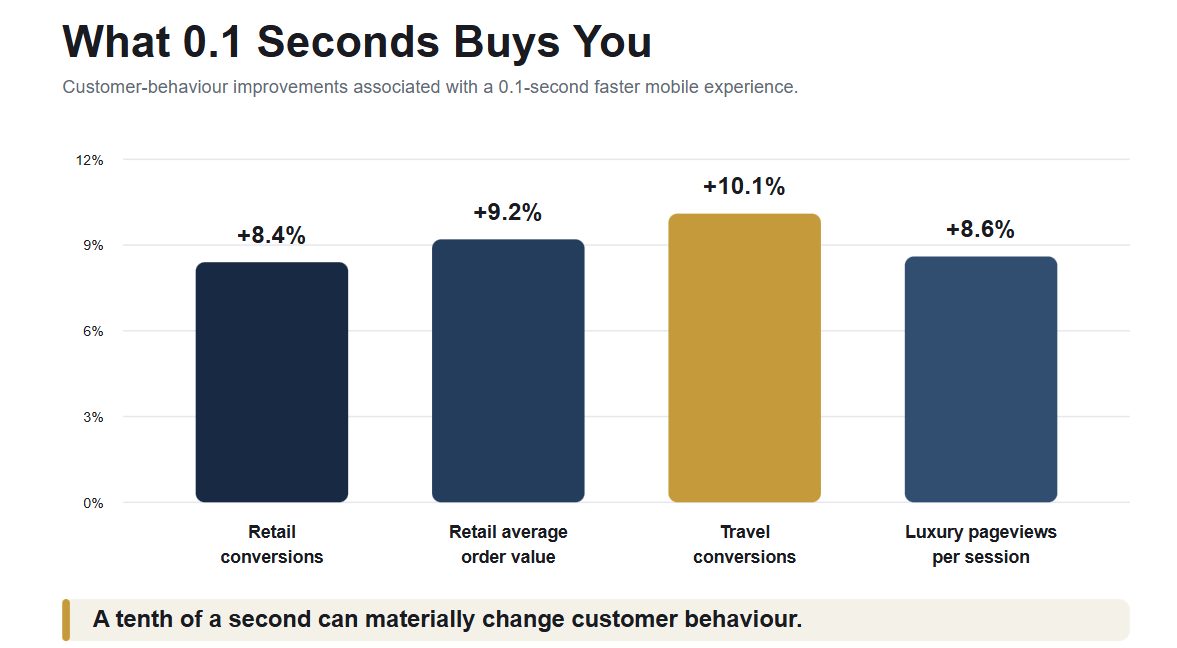
Speed alone can also affect conversion. Deloitte and Google studied the relationship between mobile site performance and customer behavior and found that a 0.1-second improvement was associated with an 8.4% increase in retail conversions, a 9.2% increase in average order value, and a 10.1% increase in travel conversions.
A premium strategy can bring the sale, but the sale creates pressure on the business behind it. More customers mean more service, more customization, and higher expectations. Strong companies prepare the team and operating structure first, then turn to custom software development services when their existing systems become the constraint.
5. Vertical Integration: Find What’s Actually Holding You Back
A business can have strong demand, a capable team, and a clear growth plan and still hit the same ceiling every year. Business growth strategies only work when the operation can support them. The problem is often buried in the process: too many vendors, disconnected systems, manual handoffs, or delays between one part of the business and the next.
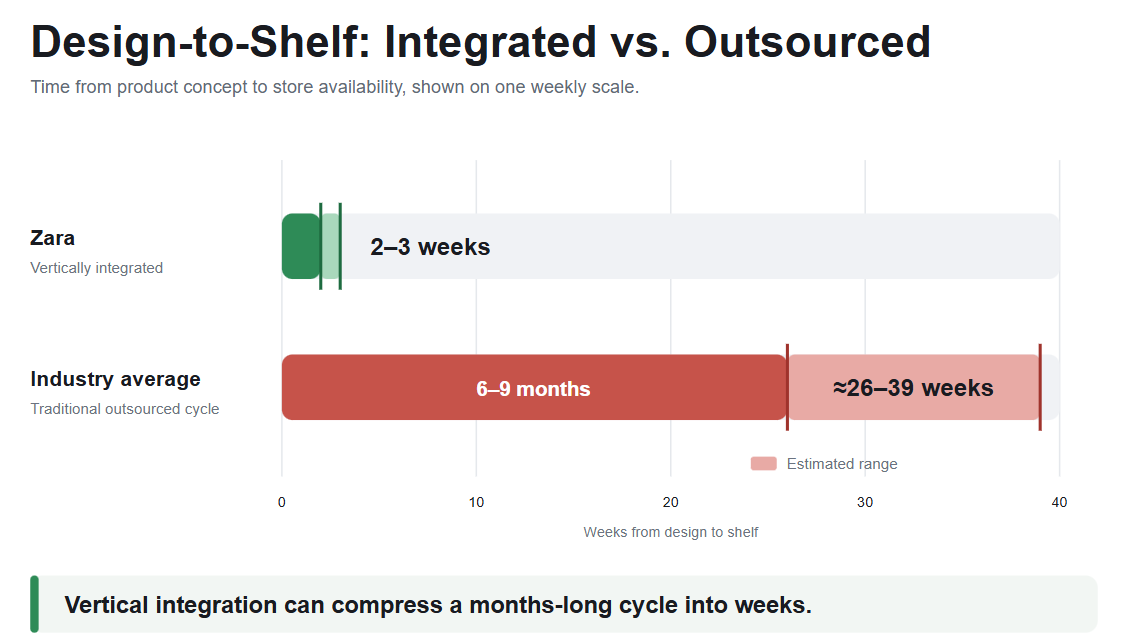
Vertical integration brings more of those functions under one operating model. Zara is a well-known example. Inditex controls much of its design, manufacturing, distribution, and retail process. This gives Zara more control over the supply chain and helps new designs move from concept to stores in weeks rather than the months common in traditional fashion retail, according to Intuit’s analysis of Zara’s supply chain.
As a company brings more stages of its operation under its control, its software may also need to connect those functions and coordinate the data and workflows between them. Map the parts of the operation that slow growth, identify where information gets lost, or work gets repeated, and then decide where better systems can remove those gaps. Custom software can be useful when off-the-shelf tools cannot connect the way your operation actually works.
Quick Steps to Put This Business Growth Plan Into Motion
You don’t need all five at once. You need the right one, sequenced properly.
- Step 1: Find the constraint. Run a two-week audit. Where does revenue leak, where do people rekey data, where do customers drop off? Name one bottleneck, not ten.
- Step 2: Use the constraint to identify which strategy deserves further evaluation. A pricing problem may point toward Blue Ocean Strategy. Limited market reach may call for an Ansoff-based approach. Churn among high-value accounts may require Strategic Account Management. Thin margins may make More for More positioning worth evaluating. Operational complexity may point toward vertical integration.
- Step 3: Separate what software can fix from what it can’t. Culture and positioning problems don’t get solved by a build. Capacity, speed, and data problems do.
- Step 4: Decide build vs buy. If your process is genuinely differentiated, off-the-shelf will flatten it.
- Step 5: Hire the custom software development company. Start with one high-impact module rather than a platform-wide rewrite. Define the first release around a specific business problem, set measurable outcomes, and use the results to decide what should come next. The outsourcing process is more manageable when the scope is clearly defined.
Conclusion
Growth creates opportunities, but it also creates more work. As the business grows, more customers, orders, employees, processes, and data have to be handled at the same time. What worked with a smaller operation can become difficult to manage at a larger scale.
One option is to keep adding people to handle the extra workload. That can increase overhead and make processes harder to manage consistently. Another option is to improve the workflows behind the business so the existing team can handle more without adding unnecessary complexity.
This is where a custom software solution can make sense. Instead of forcing your business into a standard workflow, you can build systems around the way your business actually operates. At Unique Software Development, we can help assess your operational needs and build custom solutions that support your growth strategy, connect your workflows, and address the gaps that off-the-shelf software cannot.