
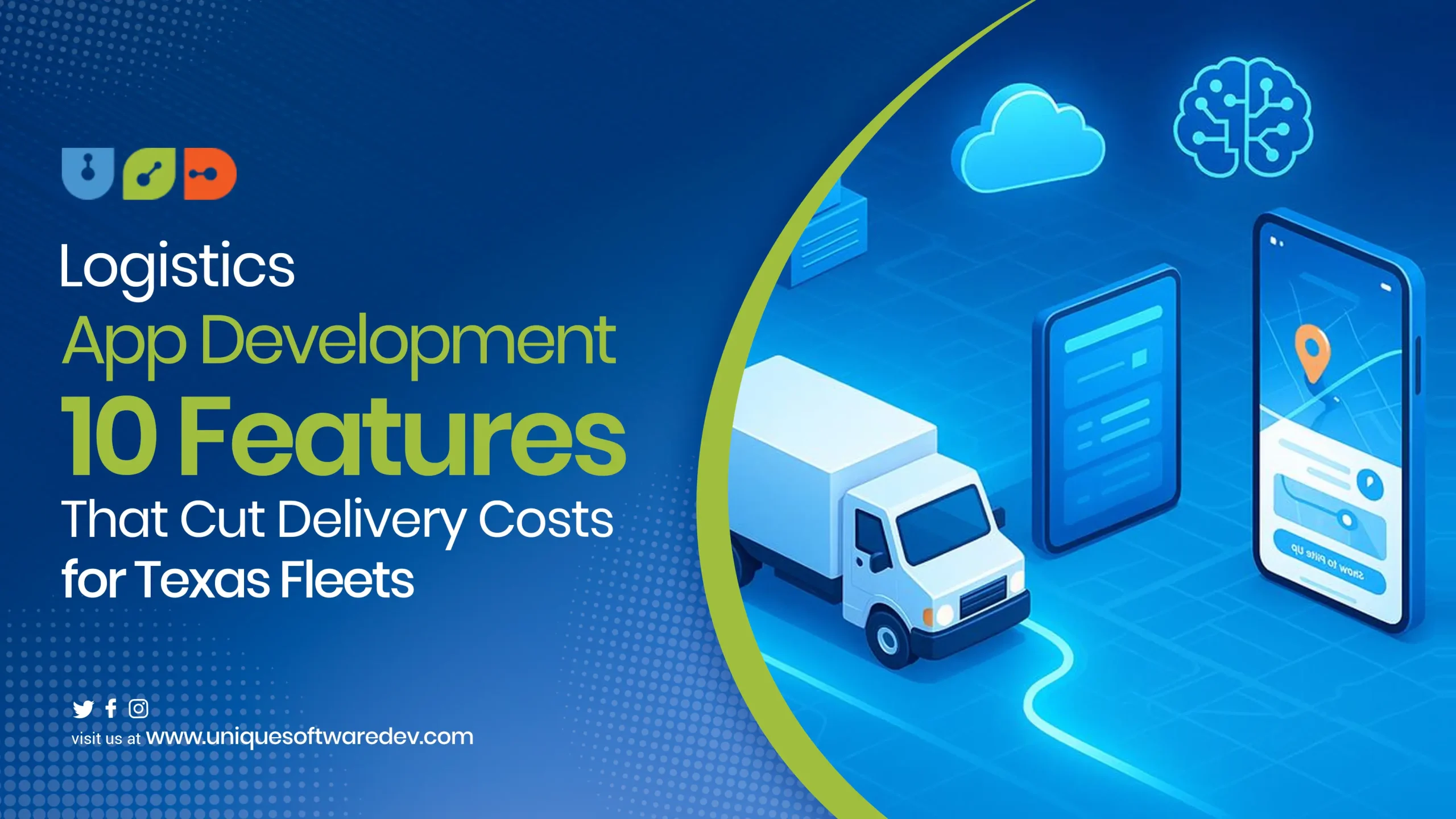
Traffic congestion alone costs the U.S. trucking industry a staggering $108.8 billion every year. If you are operating in Texas, you carry the biggest chunk of that bill at around $9 billion, according to the American Transportation Research Institute.
On top of this, high fuel prices, labor shortages, and tight delivery schedules constantly squeeze profit margins across the state. In the middle of these challenges, monitoring your fleet with an ordinary off-the-shelf logistics application with generic features allows daily operational friction to drain your margins even faster than fuel. Unoptimized routes, manual dispatching, hidden driver locations, and delivery delays quietly erode profits every single day.
If you want your operations to run smoothly and stay profitable, custom-built logistics app development gives you features tailored specifically to your workflows. We highlight those exact features below. Adding them to your logistics app will make your operations fast, precise, transparent, and cost-effective.
Why Delivery Costs Continue to Rise for Texas Fleets
Texas is home to one of the nation’s busiest freight networks. Hundreds of trucks move daily between major distribution hubs in Dallas-Fort Worth, Houston, and long-haul routes across the state. But running these routes is getting more expensive by the day.
When delivery costs go up, most people point fingers at diesel prices. Fuel is definitely a factor, but it’s only a fraction of the problem. The real budget killers are the daily operational headaches happening behind the scenes:
- Manual dispatching that slows scheduling and increases the risk of human error.
- Inefficient route planning that leads to unnecessary mileage and higher fuel consumption.
- Limited real-time fleet visibility, making it difficult to respond quickly to delays or route changes.
- Unplanned vehicle maintenance, resulting in costly breakdowns and unexpected downtime.
- Paper-based proof of delivery and documentation, which create administrative bottlenecks and slow invoicing.
- Disconnected systems that prevent dispatchers, drivers, and managers from working with the same real-time information.
Individually, these issues may seem manageable. Together, they create a ripple effect that impacts operating costs, delivery performance, customer satisfaction, and profitability. So instead of treating each challenge as a separate problem, you can go for logistics app development. It connects fleet operations into a single intelligent platform, giving dispatchers, drivers, and managers real-time visibility. Custom logistics applications reduce waste, improve efficiency, and enable faster operational decisions.
1. AI-Powered Route Optimization: The Fastest Way to Reduce Fuel and Delivery Costs
Fleets often rely on map routes that were finalized years ago, mainly because it keeps tracking simple. But traffic congestion, road construction, weather disruptions, delivery time windows, and vehicle capacity all directly impact how efficiently a route performs.
What if that same map had the capability to recalculate and suggest shorter routes on the fly? That is exactly what a custom logistics app does.
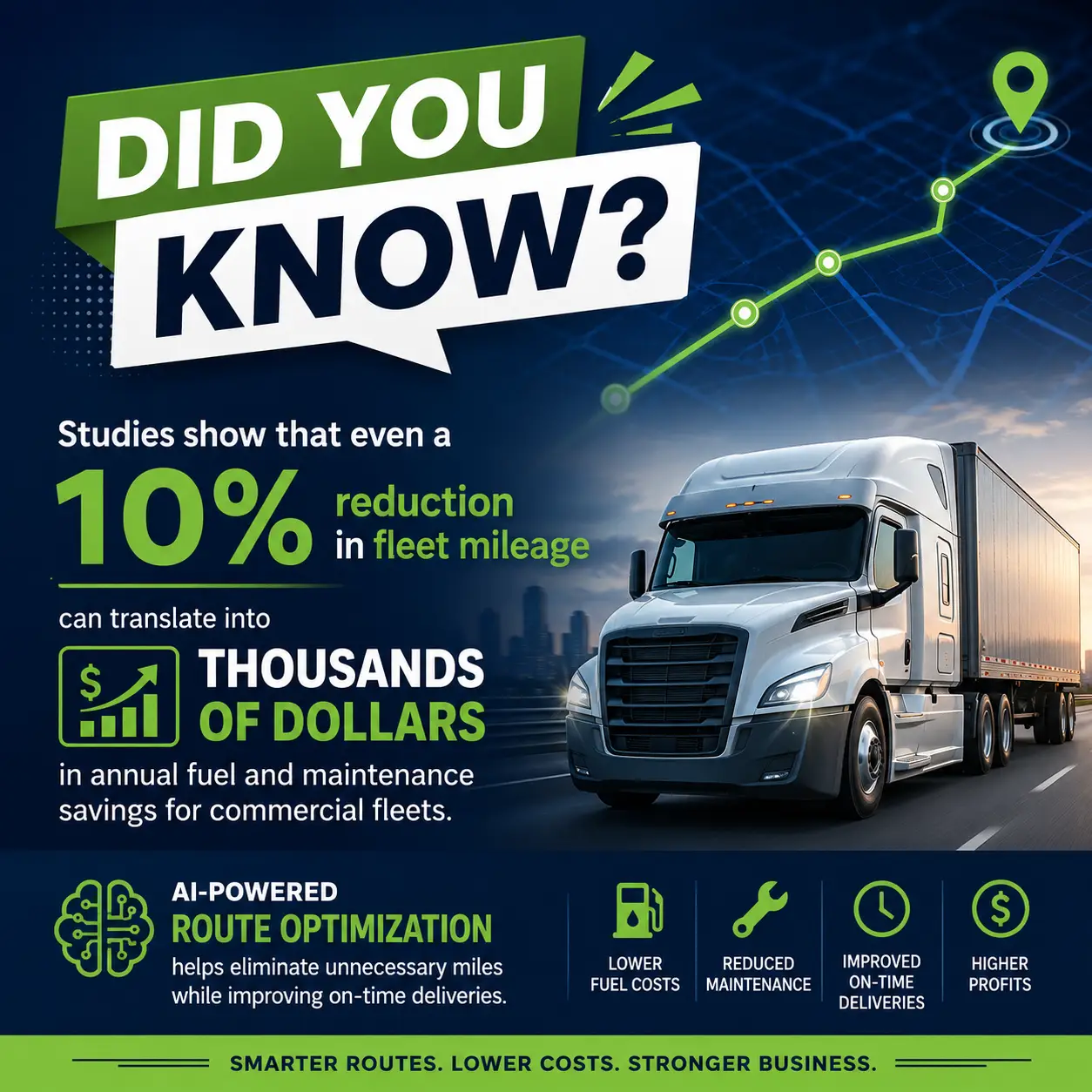
A custom logistics application analyzes these variables in real time and automatically recommends the most efficient routes before drivers leave the depot, or adjusts them while they’re on the road. Instead of asking drivers to travel the shortest distance, intelligent routing helps them travel the smartest distance.
How AI Route Optimization Reduces Delivery Costs
| Operational Challenge | How AI Solves It | Business Impact |
|---|---|---|
| Traffic congestion | Recalculates routes using live traffic data | Lower fuel consumption and fewer delays |
| Empty return trips | Optimizes delivery sequences and backhauls | Better vehicle utilization |
| Last-minute delivery requests | Dynamically adjusts driver schedules | Fewer missed deliveries |
| Excessive mileage | Selects the most efficient route instead of the shortest | Reduced vehicle wear and maintenance |
| Delivery delays | Predicts ETAs using real-time conditions | Higher customer satisfaction |
Why It Matters for Texas Fleets
Texas presents routing challenges that many logistics platforms are not designed to handle. A fleet delivering across Dallas–Fort Worth may spend hours navigating rush-hour traffic. A custom logistics solution goes beyond basic navigation by adapting to changing conditions throughout the day. Instead of relying on fixed routes, it continuously factors in real-time traffic congestion, toll roads, alternate routes, driver hours-of-service (HOS) regulations, and vehicle load capacity.
It also updates delivery priorities, customer time windows, and weather disruptions. This dynamic approach of transportation software allows dispatchers to respond quickly to unexpected changes without manually recalculating routes, which helps drivers stay on schedule while reducing delays, fuel consumption, and overall delivery costs.
2. Real-Time GPS Fleet Tracking: Improve Visibility and Eliminate Costly Delays
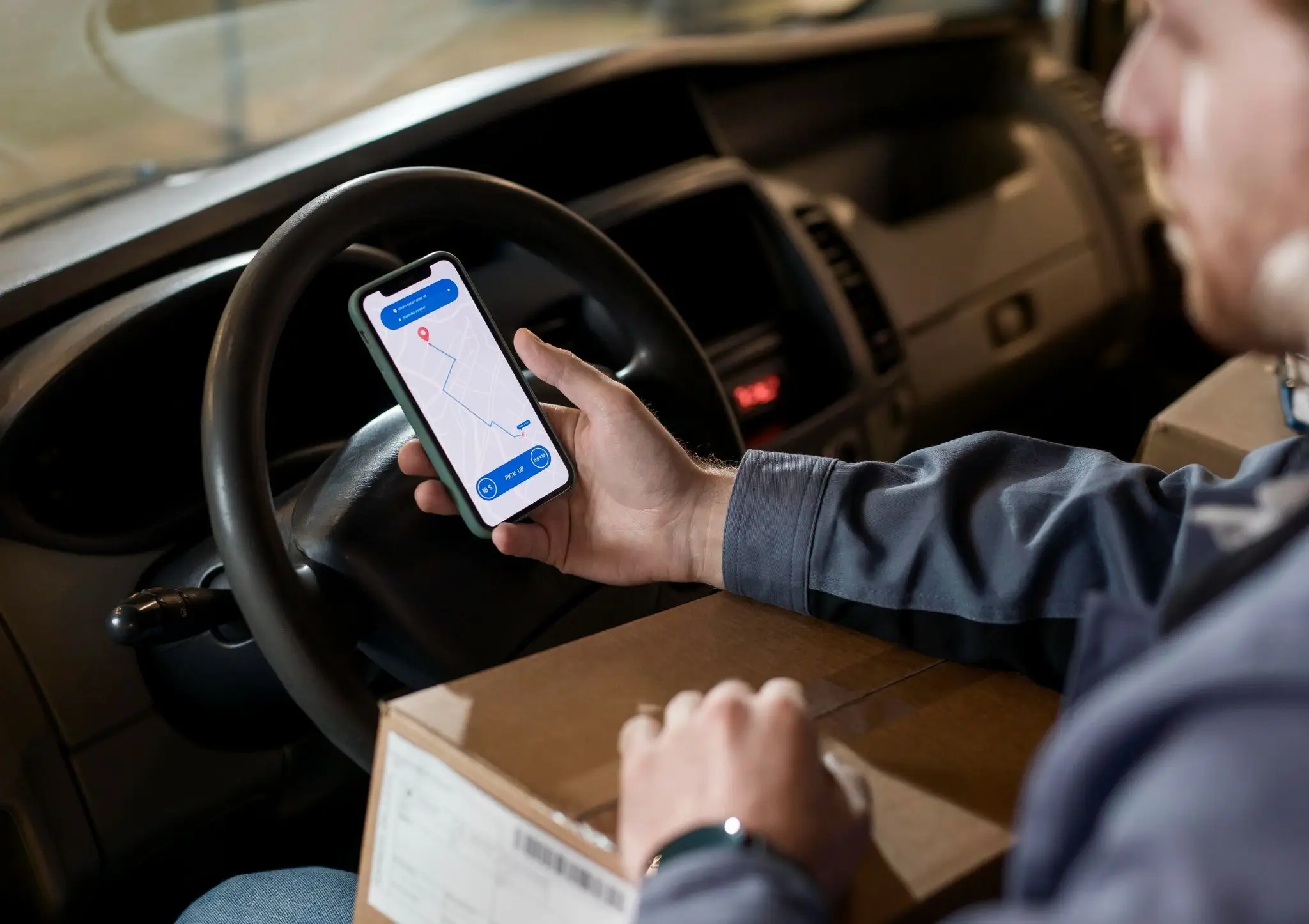
One of the biggest challenges in fleet management is knowing where it is right now and whether it’s operating according to plan. Without real-time visibility, dispatchers may spend valuable time calling drivers for updates, customers may receive inaccurate delivery estimates, and unexpected delays often go unnoticed until they’ve already disrupted operations.
A custom logistics application replaces these blind spots with live GPS tracking. This gives operations teams a complete view of every vehicle from a centralized dashboard.
What Real-Time Fleet Tracking Makes Possible
Real-time fleet tracking gives dispatchers and fleet managers complete visibility into daily operations. This allows them to address issues before they impact deliveries. Managers can monitor live vehicle locations, track driver progress against planned routes, and identify unexpected stops or excessive idle time. This also allows them to view accurate estimated arrival times, detect route deviations, receive delivery status updates, and monitor geofenced arrivals and departures.
With this level of visibility, teams can make proactive decisions, improve customer communication, and keep deliveries running efficiently even when unexpected challenges arise.
Beyond Tracking: Turning Data into Better Decisions
The true value of GPS tracking is using location data to identify patterns that affect profitability.
Delivery analytics identify a specific, repeating problem where shipments in one zone consistently run late between 4:00 PM and 6:00 PM. Over time, these small operational improvements compound into measurable gains in efficiency and customer satisfaction.
3. Smart Dispatch Management: Get the Right Driver to the Right Job, Faster
A delayed dispatch can disrupt an entire day’s schedule. When assignments are managed through phone calls, spreadsheets, or disconnected software, dispatchers spend more time coordinating drivers than optimizing operations. A modern logistics app development company streamlines dispatch management by automating driver assignments based on predefined rules. This helps fleets respond faster without sacrificing efficiency. For Texas fleets handling hundreds of deliveries daily, even saving a few minutes per assignment can translate into significant operational gains over time.
Smart Dispatch vs. Manual Dispatch
| Manual Dispatch | Smart Dispatch |
|---|---|
| Phone calls and text messages | Automated job assignments |
| Limited visibility into driver status | Real-time driver availability |
| Manual route planning | Route-aware dispatching |
| Higher risk of scheduling conflicts | Intelligent workload balancing |
| Slower response to urgent deliveries | Instant reassignment when priorities change |
4. Driver Mobile App: Empower Drivers to Stay Productive on Every Route
Drivers are at the center of every delivery operation, yet they’re often the last to receive modern tools. Paper manifests, constant phone calls, and manual updates create unnecessary distractions that slow down deliveries and increase the likelihood of errors.
A dedicated logistics or driver app makes daily work much simpler by keeping everything in one place. Drivers can view daily schedules, follow turn-by-turn navigation on optimized routes, and access customer details at every stop. They can also scan package barcodes, upload digital proof of delivery, message dispatchers, report delays, and complete vehicle checks. And yes, it all happens without switching between apps or handling paperwork.
This streamlined workflow of transportation software reduces unnecessary phone calls, paperwork, and manual updates that can slow down deliveries. Drivers spend less time managing administrative tasks and more time on the road, while dispatchers gain real-time visibility into field operations. This helps to improve communication, delivery accuracy, and overall fleet efficiency.
5. Electronic Proof of Delivery (ePOD): Speed Up Payments and Reduce Delivery Disputes
Delivery doesn’t end when a shipment reaches its destination. Without reliable documentation, businesses often face customer disputes, delayed invoicing, and additional administrative work. Electronic Proof of Delivery (ePOD) digitizes the final step of the delivery process by capturing delivery confirmation instantly within the logistics app.
A Complete Digital Delivery Record
Instead of relying on paper receipts, ePOD allows drivers to capture:
- Customer signatures
- Time and date stamps
- GPS location
- Delivery photos
- Barcode scans
- Delivery notes
- Contactless confirmations
Moreover, with transport and logistics app development, all information is synchronized instantly, creating a secure digital record that can be accessed whenever needed.
Related Article: Track Transportation Software ROI Metrics The Right Way
6. Predictive Fleet Maintenance to Reduce Downtime and Avoid Expensive Repairs
A truck sitting in a repair shop is a huge revenue loss. For fleet operators, unexpected breakdowns can create a chain reaction that may cause missed delivery windows and emergency repair costs. This results in customer dissatisfaction and reassignment challenges
Traditional maintenance schedules often rely on fixed intervals, such as servicing vehicles after a certain number of miles or months. While this approach works, it does not always account for how vehicles are actually being used.
Custom logistics mobile app development with predictive maintenance capabilities uses real-time vehicle data to identify potential issues before they become major failures.
How Predictive Maintenance Works
Predictive maintenance helps fleets stay ahead of vehicle issues by identifying potential problems before they turn into major failures. By monitoring vehicle health, businesses can increase uptime, extend asset lifespan, and reduce roadside breakdowns. Furthermore, it improves maintenance planning and avoids unnecessary part replacements.
Also, fleet operators can schedule maintenance at the right time and work around delivery commitments. This proactive approach reduces downtime, controls repair costs, and keeps vehicles operating reliably.
Ready to Build a Smarter Fleet Management Solution?
The right logistics app prevents costly breakdowns as it connects routing, dispatching, GPS tracking, maintenance, and analytics into one intelligent platform. At Unique Software Development, we build custom logistics applications tailored to your fleet’s unique workflows, helping you reduce operating costs and improve delivery performance.
7. Fuel Monitoring and Driver Behavior Analytics: Control One of Your Biggest Fleet Expenses
Many of you may have guessed the correct answer: fuel. While its prices are outside a company’s control, fuel waste often isn’t. Also, excessive idling, aggressive driving, inefficient routes, and poor vehicle utilization can quietly increase fuel consumption across an entire fleet.
Now think about a logistics app with fuel monitoring and driver behavior analytics that helps managers understand where fuel is being wasted and what actions can improve efficiency. Sounds great?
What Fuel Analytics Can Track
A custom logistics solution can monitor:
| Metric | Why It Matters |
|---|---|
| Fuel consumption per vehicle | Identifies inefficient vehicles |
| Idle time | Detects unnecessary fuel usage |
| Acceleration and braking patterns | Measures driving efficiency |
| Route mileage | Highlights unnecessary travel |
| Fuel purchase records | Helps detect irregularities |
Turning Driver Data Into Savings
A fleet manager may discover that certain routes consistently create excessive idle time due to delivery scheduling issues. And with the help of an app, the company can adjust delivery windows or optimize routes to solve the underlying problem. Similarly, identifying harsh braking or aggressive acceleration patterns can help businesses reduce fuel waste and lower vehicle wear. Furthermore, it may improve safety and decrease maintenance frequency.
8. Real-Time Analytics Dashboard: Turn Fleet Data Into Better Decisions
Fleet data is valuable, but only when businesses can turn it into clear actions. A logistics company may track completed deliveries, active vehicles, fuel usage, and driver activity, but without proper analysis, it is hard to know where costs are increasing or where performance is dropping.
A custom logistics app with logistics analytics brings these insights into one place. Fleet managers can quickly identify inefficient routes, high-cost vehicles, frequent delays, and areas that need improvement.
Make Smarter Decisions With Real-Time Insights
When combined with GPS fleet tracking and transportation management software, an analytics dashboard gives businesses a complete view of their operations. Managers can monitor vehicle utilization, delivery performance, maintenance needs, fuel expenses, and driver productivity.
For example, if a route takes longer than expected or a vehicle starts consuming more fuel, the dashboard highlights the issue early. This allows fleet teams to fix problems before they increase costs, improve daily operations, and maintain reliable delivery performance.
Featured Article: 15 Essential Dispatch Software Features For Modern Fleets
9. Customer Delivery Tracking Portal: Improve Transparency and Reduce Support Costs
Customers today expect visibility. Repeated calls asking, “Where is my delivery?” consume valuable time for both customers and dispatch teams. A customer tracking portal built into a logistics application provides real-time shipment updates, estimated arrival times, and delivery status without requiring manual communication.
Key Benefits
- Real-time delivery visibility for customers
- Fewer tracking-related support calls
- Improved customer satisfaction
- Better delivery transparency
- Stronger brand trust
For Texas fleets managing high delivery volumes, customer-facing tracking tools reduce communication bottlenecks while creating a smoother delivery experience.
10. Geofencing and Automated Alerts: Monitor Operations Without Manual Follow-Ups
Managing a fleet requires attention to countless small details, from vehicle arrivals to delivery progress. Manual follow-ups and frequent calls can take up valuable time and still leave room for missed updates. Geofencing simplifies this process by creating virtual boundaries around specific locations and automatically tracking vehicle movements within those areas.
Improve Control With Instant Notifications
A logistics app with geofencing can send real-time alerts when a vehicle enters or leaves a location, reaches a delivery point, takes an unexpected route, or spends too much time at a stop. These automated updates help fleet managers respond faster, improve delivery coordination, and maintain better control over daily operations.
By reducing manual tracking and improving visibility, geofencing helps businesses minimize delays, improve customer communication, and ensure smoother fleet performance.
Why Custom Logistics Software Beats Off-the-Shelf Solutions
Many businesses start with ready-made logistics platforms because they offer quick deployment. However, as operations grow, limitations often become apparent. Generic solutions usually force businesses to adapt their workflow around the software. Custom logistics app development takes the opposite approach, it builds technology around the company’s actual processes.
| Off-the-Shelf Software | Custom Logistics Software |
|---|---|
| Fixed features | Tailored functionality |
| Limited customization | Built around business workflows |
| Multiple unnecessary tools | Only required features |
| Difficult integrations | Connects with existing systems |
| Scaling limitations | Designed for future growth |
For Texas fleets with unique delivery requirements, vehicle types, service areas, and customer expectations, custom software provides greater flexibility and long-term value.
Reduce Delivery Costs With Custom Logistics App Development
Ready to reduce delivery costs, streamline fleet operations, and gain complete visibility across your logistics network? Partner with Custom Logistics App Developers to build a custom logistic app development tailored to your business goals. If you are looking to optimize routes, automate workflows, or improve real-time fleet management, our experts are here to help.
Build a Logistics App that Turns Fleet Operations Into a Competitive Advantage
Delivery costs rarely increase because of one major problem. They grow because of dozens of small inefficiencies, extra miles, delayed dispatches, and limited visibility across operations. For Texas fleets operating in a demanding transportation environment, logistics app development provides the tools needed to identify these inefficiencies and eliminate them. From intelligent routing and real-time tracking to predictive maintenance, the right logistics solution helps businesses operate more efficiently while creating a better delivery experience for customers.