

A patient who needs a quick consultation may not be willing to spend half a day getting to a hospital, waiting for an appointment, and traveling back home. And when getting care from another provider takes only a few taps, convenience can quickly become a factor in where that patient chooses to go.
For healthcare businesses, that shift creates an opportunity, but also a challenge. Offering virtual care can extend your reach beyond the hospital, give providers another way to handle follow-ups, and make care easier to access. But delivering that experience reliably requires much more than putting a video call inside an app.
Appointments need to connect with provider schedules. Doctors need access to the right patient information. Prescriptions and payments need their own workflows. Every piece also has to handle sensitive health data within the required security and compliance standards.
That is why telehealth app development needs to be planned around the entire care workflow, not just the consultation screen. This guide covers the costs, essential features, compliance requirements, advanced capabilities, and key decisions that shape a successful telehealth platform.
Why Invest in Telehealth App Development in 2026?
A patient with a cough, sinus infection, or rash may not want to spend hours driving to a hospital for a quick consultation. In fact, almost 75% of patients surveyed preferred telehealth or other available care options for these minor but urgent issues.
Patients aren’t simply asking whether they can see a doctor. They increasingly care about how quickly and easily they can reach one. If another medical center can offer that consultation from a phone while yours requires a trip across town, the patient has an easier option.
Telehealth can also fix problems inside the hospital. A patient 90 minutes away can handle a follow-up virtually. A canceled appointment can be replaced with a remote visit, while specialists can reach patients outside the hospital’s immediate area. That can expand geographic reach, create appointment capacity without new square footage, and reduce some administrative friction.
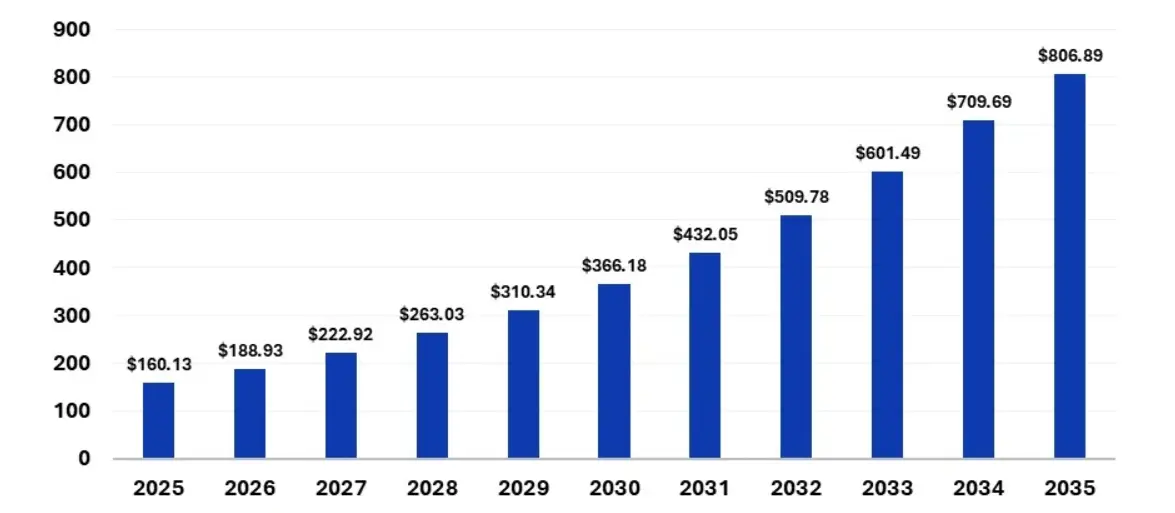
Grand View Research values the global telehealth market at $87.7 billion in 2026, with North America holding roughly 45% of revenue. Telemedicine app development is no longer an experiment budget line; it’s infrastructure, and it sits alongside broader healthcare software development roadmaps.
How Much Does It Cost to Develop a Telehealth App in 2026?
A telehealth app can cost anywhere from $250,000 to $1,000,000+ in 2026. A basic product may connect patients with doctors through booking and video consultations. A hospital-grade platform can add EHR integration, e-prescribing, remote monitoring, payments, and multiple provider roles.
The biggest mobile app development cost jumps usually come from compliance requirements, integrations, and the number of workflows the platform needs to support.
Here’s what those ranges look like by platform scope:
| Platform Scope | What You’re Building | Timeline | Estimated Cost |
|---|---|---|---|
| Lean MVP | Patient onboarding, provider profiles, booking, video consultations, payments, admin | 3–5 months | $40K–$80K |
| Growing Platform | MVP + messaging, records, notifications, provider management, analytics, one major integration | 5–8 months | $80K–$150K |
| Advanced Platform | EHR, e-prescribing, RPM, multiple roles, advanced analytics, deeper compliance workflows | 8–12+ months | $150K–$300K+ |
| Enterprise Ecosystem | Multiple EHRs, wearables, AI, complex integrations, multi-tenant architecture, custom workflows | 12+ months | $300K+ |
These are planning ranges, not fixed quotes. Your final cost will depend on the platform scope, integrations, compliance requirements, team location, and development approach.
The real cost question is what your telehealth app needs to handle. A single-provider consultation app has a very different budget from a multi-specialty platform connecting patients, doctors, pharmacies, insurers, EHRs, and remote monitoring devices.
What Factors Affect Telehealth App Development Cost?
Two apps with identical feature lists can differ by $100,000. Telemedicine app development cost is shaped by six variables, and every one of them is a decision you make. Healthcare app development behaves differently from consumer software here: the same feature costs more when the data behind it is regulated.
App Type and Business Model
A direct doctor-to-patient app has very different requirements from a multi-provider marketplace. A hospital platform, mental health app, remote patient monitoring service, subscription telehealth brand, and B2B platform for clinics each work differently.
“Telehealth app” isn’t one product with one price tag. Each model needs its own workflows, permissions, integrations, and payment flows. Define your users, care model, target market, and payment model before designing the first screen. Those decisions shape the scope, and the scope drives the cost.
Number of User Roles
Most teams budget for two roles and ship with five. Patient, doctor, admin, pharmacist, lab technician, support staff. Each one adds a dashboard, a permission matrix, a notification set, and its own QA pass. Roles multiply testing rather than adding to it, because every permission boundary needs verification in both directions. Cut role count in your MVP and defer the rest; a pharmacist portal you don’t need yet is $15,000 you haven’t spent.
Platforms
iOS, Android, web, admin dashboard, and provider portal can all add to the development scope. Patients tend to use mobile apps, while clinicians often prefer desktop web during clinic hours, and admins typically work through a browser.
Cross-platform frameworks like React Native or Flutter can reduce mobile development costs by sharing a codebase. However, some device-specific features still require native development. Camera access, Bluetooth peripherals, and background health data are common examples. Our overview of Android development frameworks covers these tradeoffs in practical terms.
Integrations
EHRs, EMRs, payment gateways, pharmacy networks, labs, provider calendars, insurance checks, wearables, and identity verification can all raise the development cost. Each integration brings its own engineering work, vendor fees, and sandbox access. The bigger headache is the data itself. Clinical systems rarely speak the same language, so developers often spend more time mapping, cleaning, and reconciling records than connecting the API. That is where centralized patient record tracking becomes important.
Security and Compliance
Consumer app security may mean HTTPS and a solid password policy. Healthcare security goes much further. You need encryption at rest and in transit, granular role-based access, immutable audit logs, and proper key management. You also need breach-notification procedures, data retention controls, penetration testing, and a signed BAA with every vendor that handles PHI.
AI, IoT, and Remote Monitoring
Adding an AI triage assistant or a device data stream is more than adding another feature. It introduces another layer of technology to build, test, secure, and maintain.
AI features need testing for unpredictable outputs. IoT and remote monitoring require infrastructure that can handle continuous data instead of occasional sessions.
Once the software starts influencing clinical decisions, the compliance burden grows too. That is where custom AI development can add another layer of cost and complexity.
What Hidden Costs Should You Budget For?
Most telehealth app development quotes stop at the build price. That’s the number that gets approved, and the reason year-one budgets blow up in month four.
Plan for these:
- Cloud hosting on HIPAA-eligible infrastructure, which carries a premium over standard tiers
- Video infrastructure, billed per participant-minute and scaling with usage, not headcount
- SMS and email notifications for appointment reminders and OTP verification
- Third-party API fees across identity, eligibility, and mapping services
- EHR integration fees, often per-connection or per-provider annually
- Payment processing fees plus reconciliation and refund handling
- Security audits and annual penetration testing
- Compliance consulting and legal review of consent flows, BAAs, and state-level rules
- App-store fees and health-category review cycles, which reject more often than most teams expect
- Monitoring and observability tooling, see site reliability engineering for what production readiness actually requires
- Maintenance, realistically 15–25% of build cost per year
- Bug fixes and regression testing after every clinical workflow change
- Infrastructure scaling as concurrent sessions grow
- AI API usage, metered per token or per inference
- Customer support staffing, because patients call when video fails
What Compliance Requirements Does a Telehealth App Need?
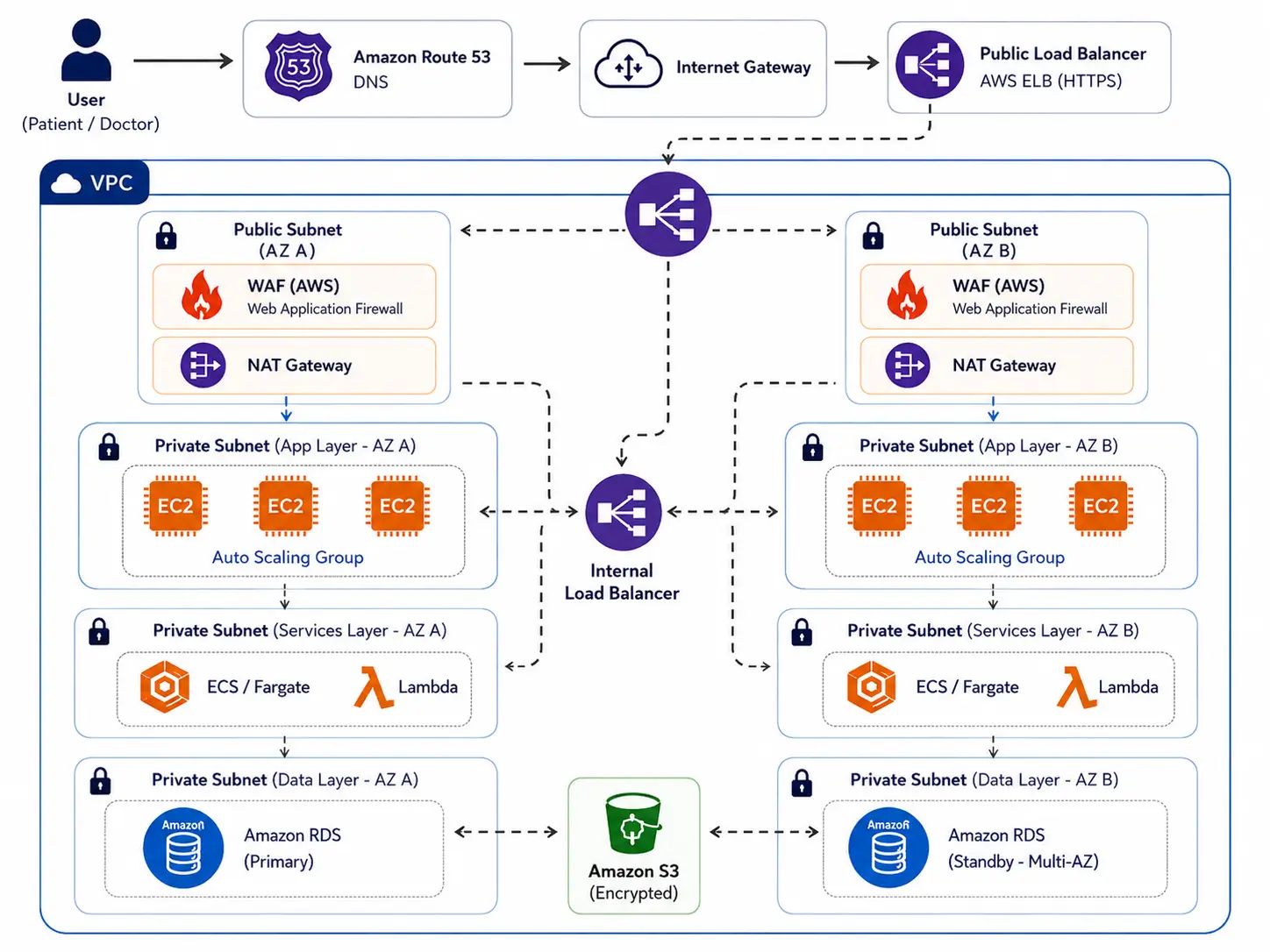
Compliance in healthcare isn’t a checklist you clear before launch. It’s a set of constraints that determines how your database is partitioned, how sessions are authenticated, and which vendors you’re allowed to call.
HIPAA Compliance
HIPAA’s Security Rule governs how you handle protected health information through administrative, physical, and technical safeguards. Practically, it means unique user identification, automatic logoff, and proper encryption. You also need a signed Business Associate Agreement with every vendor that handles PHI, including your video and hosting providers. Healthcare breaches also take the longest to contain of any industry, averaging 279 days, which is why detection capability counts as compliance work.
GDPR and Regional Privacy Laws
If any patient is in the EU or UK, GDPR can apply regardless of where your servers are located. That means handling lawful processing, data minimization, erasure requests, data portability, breach notifications within 72 hours, and potentially appointing an EU representative. US state laws add their own layers, and telehealth licensure and modality rules remain largely state-governed and genuinely inconsistent. Multi-region launches need a data residency decision made in architecture, not in the privacy policy.
Data Encryption
Encrypt in transit with TLS 1.2 or higher, and at rest with AES-256. That part is easy; the harder part is key management. You need to control where keys live, who can rotate them, and how they are separated from the data they protect. Backups and logs also need the same encryption standards as your primary database. Field-level encryption for identifiers and diagnoses adds protection when a single compromised query shouldn’t expose a whole record.
Access Controls and Authentication
Role-based access control with least-privilege defaults, multi-factor authentication for every clinical and admin account, session timeouts, and device-level trust signals. A doctor should see their panel, not the database. Support staff should resolve tickets without reading clinical notes. Break-glass emergency access needs to exist, be logged loudly, and be reviewed afterward. Most real-world PHI exposure comes from over-broad internal permissions, not external attackers.
Audit Logs
Your system should maintain detailed, tamper-resistant audit records of access and activity involving PHI. These logs should be searchable for investigations, retained according to HIPAA’s six-year documentation requirements, and protected from the users they monitor. Retrofitting audit logging after launch is one of the most expensive architectural corrections in healthcare software because it can affect every data path already built.
Patient Consent
It’s a versioned, auditable record of what a specific patient agreed to, when, under which policy version. Telehealth adds informed consent to virtual care itself, and several states mandate specific disclosures before a first virtual visit. You’ll also need granular consent for data sharing, recordings, and any research or AI training use. Build it as a first-class data model, because you will be asked to prove it.
Secure Communication
Video, chat, and file transfer all need end-to-end encryption, and your video vendor must sign a BAA. Consumer conferencing tools generally can’t. Sessions shouldn’t be recorded by default, notifications shouldn’t leak clinical detail to a lock screen, and chat history needs the same retention and audit treatment as records. Include an audio-only fallback path; bandwidth failures during a consultation are a clinical risk, not a UX annoyance.
Third-Party Vendor Compliance
Your compliance posture is only as strong as your weakest vendor. Every subprocessor handling PHI, including hosting, video, SMS, analytics, error monitoring, and AI APIs, needs a BAA, security review, and documented data flow. Analytics SDKs are the usual failure point, quietly shipping identifiers to platforms that never signed anything. Vendor inventory is an ongoing obligation, not a launch task.
The point most vendors won’t tell you: Compliance is not a feature you add at the end. It dictates database design, infrastructure region, authentication model, integration choices, logging strategy, and data retention from the first sprint. Any telehealth app development partner who prices compliance as a final-phase line item is quoting you a rebuild.
What Features Should a Telehealth App Have?
Feature scope is the single biggest lever in telehealth app development, so map every feature to the workflow its user actually performs.
| Patient | Doctor | Admin |
|---|---|---|
| Registration & profile | Provider profile & credentials | User management |
| Doctor search & booking | Availability management | Provider verification |
| Video & audio consultation | Appointment queue | Appointment oversight |
| Secure messaging | Patient records access | Payment management |
| Medical records & history | Clinical notes | Reporting & analytics |
| Prescriptions | E-prescriptions | Permissions & roles |
| Payments & notifications | Billing & patient comms | Compliance monitoring |
Ship the column your business model depends on first. Most failed telehealth products had excellent patient apps and a doctor experience that clinicians quietly refused to use, which kills supply and then demand.
Which Advanced Features Increase Telehealth App Development Cost?
Advanced functionality is where telehealth becomes defensible and where budgets get interesting. Each item below is a subsystem with its own infrastructure, testing burden, and regulatory questions.
AI-Powered Features
- Symptom triage and intake summarization
- Ambient documentation that drafts clinical notes from the consultation
- Risk scoring and no-show prediction
- Note: clinical decision support can cross into FDA-regulated Software as a Medical Device territory
Remote Patient Monitoring
- Continuous vitals ingestion instead of session-based data
- Threshold alerting with clinical escalation paths
- Time-series storage and retention planning
Wearable Integration
- Apple HealthKit and Google Health Connect data pipelines
- Bluetooth peripherals: BP cuffs, glucometers, pulse oximeters
- Device calibration, data-gap handling, and reconciliation logic
AI Chatbots
- Triage and pre-visit intake automation
- 24/7 administrative support and FAQ deflection
- Strict guardrails separating information from advice; see our guide to building an AI healthcare chatbot
Medication Management
- Adherence reminders and refill workflows
- Pharmacy network routing and delivery tracking, which overlaps with medical courier app logistics
- Controlled-substance handling: The DEA currently allows telemedicine prescribing of Schedule II to V medications without a prior in-person visit through December 31, 2026. Permanent rules, including the proposed Special Registration, are still pending. Build this module to adapt as those rules change.
Advanced Analytics
- Clinical outcome and utilization dashboards
- Provider performance and capacity modeling
- Payer-ready reporting, with de-identification handled properly
How to Develop a Telehealth App
Telehealth app development runs through eight stages, and the order matters more than the speed. Teams that reorder steps two and five pay for it in a rebuild.
- Define the healthcare use case: Set the target users, care model, geography, and business goals. Map the workflow the app will improve.
- Map compliance requirements: Build HIPAA, state telehealth laws, prescribing rules, consent, and privacy requirements into the technical plan from the start.
- Define the MVP: Prioritize core workflows such as registration, booking, video consultations, messaging, payments, and patient records. Keep advanced features for later phases.
- Design the UX/UI: Create separate experiences for patients, providers, and admins. Keep each workflow clear and efficient.
- Choose the technology stack: Select the mobile, web, backend, database, cloud, video, and security technologies that fit the product. Our guide to SaaS, IaaS, and PaaS models covers the main cloud options.
- Develop and integrate: Build the core platform and connect EHRs, payments, pharmacies, labs, notifications, and wearable devices as required.
- Test the platform: Test security, permissions, APIs, encryption, video quality, performance, and low-bandwidth connectivity. Automated software testing in healthcare supports reliable regression testing.
- Launch and maintain: Monitor performance, release security updates, fix issues, scale infrastructure, and adapt the platform as healthcare requirements evolve.
Conclusion
Successful Telehealth App Development goes beyond connecting doctors and patients by video. It brings scheduling, records, payments, prescriptions, and compliance into one reliable workflow.
Start with the care experience you want to improve, then build around it. A focused MVP can prove the model before you invest in advanced features.
Planning Telehealth App Development? Unique Software Development can help you define the features, technology, compliance, and cost before development begins.