


Word of mouth can be one of the most powerful ways to bring new users to your app. But people usually do not recommend an app just because it exists. They talk about it when it works well, feels easy to use, and actually makes something easier for them.
That experience takes more than a good idea. It needs a development team that understands your product, your users, and what you are trying to achieve with the app. As the product grows, you may need new features, regular updates, bug fixes, integrations, or mobile expertise that your current team does not have. This is where many businesses choose to hire mobile app developers who can stay focused on the product as it grows.
Of course, hiring developers comes with its own questions. Should you hire a dedicated team, work with freelancers, or build an in-house team? What roles do you actually need? How much will it cost? And what should you check before bringing a team on board? This guide walks you through those questions so you can figure out what makes sense for your business and your app.
What Does It Mean to Hire Dedicated Mobile App Developers?
The more focused your development team is, the more deeply it can understand your product. That is the basic idea behind hiring dedicated mobile app developers. Instead of bringing developers in for a one-time project, you have a team focused on your app, its roadmap, technical needs, and long-term growth.
When you hire mobile app development services through a dedicated model, the team does not simply begin writing code right away. They first get familiar with your product, understand your business goals, review your requirements, and point out what needs rethinking.
From there, the same team can keep working with the product as it grows. They improve existing features, build new ones, fix technical issues, and make sure the app keeps up with what your users need. In simple terms, you are not just hiring people to build an app. You are bringing in a team that gets to know the product properly and stays with it for the long run.
Want to know more? Read our guide on 7 Reasons to Hire an Elite Mobile App Development Agency.
The Cost of Waiting: When Should You Hire Mobile Application Developers?
Winning back a user who deleted your app after a poor experience is like trying to un-burn a slice of toast. In fact, 17% of people surveyed by MarketingProfs said they usually decide whether to delete an app after the first use.
One laggy checkout, frozen screen, or crash can send a user away. As your app grows, new features, security, updates, and scaling add more pressure. If your current team cannot keep up, hiring dedicated mobile app developers gives your product the support it needs to keep moving.
Your App Needs Continuous Development
A mobile app is rarely a one-and-done project. A longitudinal study of Google Play found that, at most, 50% of apps had received an update within a year during its observation period. Once customers start using your app, a feature needs improving, an API changes, a bug appears, or an integration needs an update. When you hire dedicated mobile app developers, the team already knows your codebase and product history. You spend less time explaining the past and more time improving what comes next. Your app stays stable, your roadmap keeps moving, and your customer experience does not get left behind.
Your Product Requirements Keep Changing
App features exist for users. As they use the product, they show you what is missing, what feels difficult, and what they want next. That is normal. Sometimes, though, customer feedback reveals a feature you missed, and adding it can change the product’s direction. A dedicated mobile app development team already knows your product, technical decisions, and previous work, so they can adjust the roadmap without losing all that context. As the product grows, those changes can also support your business growth strategies instead of keeping the app tied to the plan you started with.
Your Internal Team Needs More Mobile Expertise
You may already have a capable development team and still have a mobile development gap. Your backend developers might know the business inside out, while iOS, Android, cross-platform development, mobile testing, or app store releases require skills that can be difficult to gather in-house. Bringing in dedicated mobile developers can fill that gap without disrupting the team you already built. They can work alongside your existing developers, share technical knowledge, and own mobile work. But if the app is part of a larger internal operation, you may need an enterprise application development company.
You Need Long-Term Mobile Development Without Building an Internal Team
Building an in-house mobile department takes more than hiring a developer. You need the right mix of developers, QA, technical leadership, management, and ongoing capacity. Then come recruitment, salaries, retention, and the question of what happens when your workload changes. A dedicated development team gives you access to that expertise without requiring you to build the whole department yourself. For businesses with a long-term mobile roadmap, it can provide a more flexible way to maintain development capacity while keeping the product moving.
An app can work perfectly on day one. Then users grow, features pile up, and the cracks start showing. Slow screens. Security gaps. Features that break something else. If that sounds familiar, a dedicated mobile development team can fix what is holding your product back and build what it needs next.
What Types of Mobile App Developers Can You Hire?
Mobile apps can be built in different ways, and the right team depends on what your product actually needs. A native iOS app, an Android app, or a cross-platform product built with Flutter or React Native can require different skills. Then there is the work users never see: backend systems, testing, infrastructure, and technical direction.
Instead of hiring every role from day one, start with the parts of the product that need ownership. Here are the main specialists you can bring into your team:
| Who to Hire | What They Handle | When You May Need Them |
|---|---|---|
| Hire iOS App Developers | Build and maintain apps for Apple’s platforms using technologies such as Swift and Apple’s development tools. | When iPhone and iPad users are a major part of your market, or you need deeper iOS-specific functionality. |
| Hire Android App Developers | Build Android experiences, including device-specific behavior, integrations, testing, and Google Play releases. | When Android is a key part of your customer base or your app needs deeper Android functionality. |
| Hire Flutter Developers | Build Android and iOS apps from a shared Flutter codebase using Dart. | Useful when you want one cross-platform codebase while still building a serious mobile product. |
| Hire React Native Developers | Build mobile apps with a shared JavaScript or TypeScript-based approach across platforms. | Useful when your product or existing team already works heavily with the React and JavaScript ecosystem. |
| Hire Backend Developers | Build the APIs, databases, authentication, business logic, payments, and integrations that power the app behind the screen, including connections with systems such as a CRM. | When your app needs accounts, transactions, real-time data, third-party services, or other server-side functionality. |
| Hire UI/UX Designers | Shape user flows, screens, interactions, prototypes, and the overall experience before and during development. | When the product needs a clearer user journey or the interface has to do more than simply look good. |
| Hire QA Engineers | Test features, devices, user flows, releases, and regressions before problems reach customers. | When reliability matters and the number of devices, features, or releases makes manual developer testing alone risky. |
| Hire DevOps and Cloud Engineers | Manage development environments, CI/CD, cloud infrastructure, deployment, and monitoring. | When releases become frequent, infrastructure gets more complex, or several developers need reliable deployment workflows. |
| Hire Technical Leads | Own technical direction, architecture, code quality, and important engineering decisions across the team. | When the product has multiple developers, complex integrations, or technical decisions that need one clear owner. |
How Much Does It Cost to Hire Dedicated Mobile App Developers?
The cost to hire mobile app developers varies widely based on location, experience, technology, engagement model, and project complexity. Hourly rates can range from lower-cost markets to $200+ per hour for experienced developers in higher-cost markets.
But the price changes when the work changes. A simple UI update is one thing. A payment feature can be very different. The screen may look straightforward, but behind it you might need a payment gateway, API work, authentication, error handling, security checks, and cross-device testing.
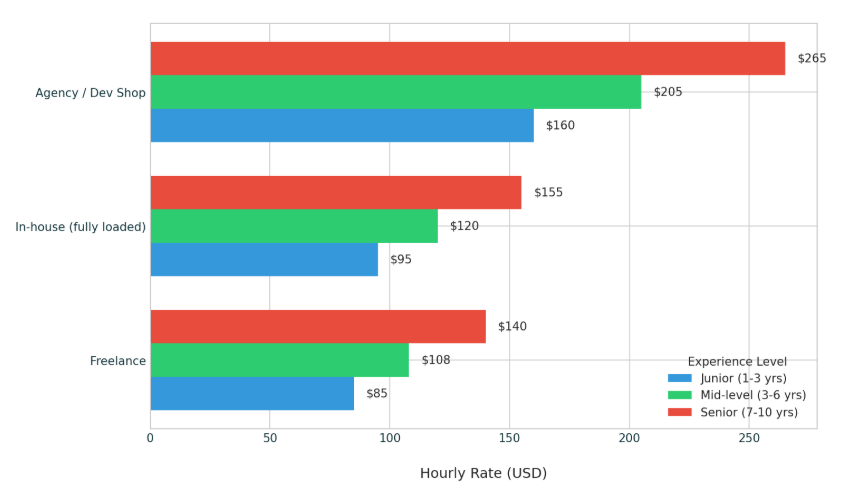
The same goes for a growing app. You may start by hiring one mobile app developer to build a feature or handle a specific part of the product, then need backend development, QA, design, or another specialist as the product grows. So when you hire dedicated mobile app developers, the cost depends less on the type of app and more on the features, technical work, and level of support it requires.
If keeping development costs under control is part of the decision, you can also see practical ways to reduce mobile app development costs.
What Can Dedicated Mobile App Developers Build?
A mobile app does not always need a team to build everything from zero. Sometimes you need a complete app. Sometimes you just need to add a feature, connect an API, fix a payment flow, or improve something that is already there.
That is where hiring dedicated mobile app developers becomes useful.
Consumer and Personal Brand Apps
If you run a personal brand, your app can become a place where your audience actually uses what you offer.
Membership apps, coaching apps, learning platforms, content apps, communities, and subscription products can all be built by dedicated mobile app developers.
For example, a coach could let members watch lessons, book sessions, track progress, and manage their subscription in one place. Your audience gets a simpler experience, while your business has a product it can keep building on.
E-Commerce and Marketplace Apps
Selling through an app involves much more than putting products on a screen. A mobile development team can build product catalogs, search, carts, checkout, order tracking, seller profiles, reviews, and other features your customers need to buy or sell without jumping between different platforms.
The app can also connect with your existing store, inventory, payment system, or CRM, so your team does not have to manage everything twice.
On-Demand and Booking Apps
Booking a service should not feel like a game of back-and-forth messages. App developers can build booking, availability, payments, notifications, location features, and service requests into one flow. A coaching business, for example, could let customers choose a time, pay, and receive reminders from the app.
The result is a smoother booking experience for customers and less manual work for your team.
Business and Enterprise Apps
Not every app is built for customers. Some are built to make the business itself easier to run. You can hire app developers to create internal tools for sales teams, field staff, operations, managers, or support teams. For businesses that need these workflows connected across departments, custom ERP development can take the setup much further. Instead of forcing your team to work around a generic tool, the app can fit the way your business actually operates.
Apps With Payments, APIs and Integrations
Sometimes the app already works. One important part just does not. A dedicated team can add a mobile payment gateway, API, CRM integration, maps, messaging, analytics, or another third-party service without rebuilding the whole product. A payment button may look tiny on the screen, but behind it can be authentication, API calls, security checks, error handling, and testing. A good custom CRM software development team handles that messy part in the background so the customer gets a simple experience up front.
How to Hire Dedicated Mobile App Developers
Hiring the right team starts before anyone writes code. A clear brief and a few checks upfront can save you from paying for work that needs to be redone later.
- Step 1: Be Clear About What Your App Needs: Write down who will use the app, what they need to do, and whether you need accounts, payments, real-time features, or integrations. Also decide what the first version needs to include.
- Step 2: Choose the Roles You Need: You may not need a full team from day one. Start with the roles your product actually needs, such as a mobile developer, backend developer, designer, or QA engineer. Add more developers as the product grows.
- Step 3: Check Relevant Experience: Look for developers who have worked on products similar to yours. If your app needs subscriptions, payments, bookings, or complex integrations, ask to see relevant work rather than judging them by portfolio size.
- Step 4: Meet the Developers: Talk to the people who will actually build your app. Ask how they would approach one of your features, what they would change, and what they need from you. Also confirm working hours and communication.
- Step 5: Settle Ownership and Terms: Before development starts, confirm source code and intellectual property ownership, repository access, NDA terms, replacement policies, notice periods, and project handover. You should know exactly what you own before you hire mobile app developers.
- Step 6: Start With Real Work: Start with a small piece of the actual product rather than months of planning. A working screen, API connection, or small feature can quickly show how the team communicates, builds, and handles feedback.
Your App Should Solve More Than One Problem
Marketing tells people what your app can solve. Good development ensures the app can deliver on that promise. A slow screen, broken integration, confusing flow, or feature that stops working after an update can quickly turn a good idea into a frustrating product. For this, hire dedicated mobile app developers who can handle those problems as they come up, improve what is already there, and build what your users need next.
At Unique Software Development, you can hire mobile app developers for a complete build, a single feature, an integration, or ongoing development. Our team helps turn your app from something people download into something they can actually rely on.