

Transportation companies across the United States face constant pressure to improve efficiency, cut operating costs, and deliver reliable service. Yet, many fleets still rely on spreadsheets, phone calls, and paper-based processes to manage daily operations. Meanwhile, their competitors use transportation dispatch software to automate scheduling, routing, and driver communication.
The gap between these two approaches goes far beyond mere convenience. It directly impacts labor costs, fuel consumption, customer satisfaction, driver productivity, and your bottom line.
Whether you run a medical transportation company, a courier service, a logistics business, or a commercial fleet, understanding the real cost difference between manual dispatching and modern software will help you make a smarter, more confident business decision.
In this guide, we break down what manual dispatching quietly costs you, how automated dispatching fixes those inefficiencies, and the actual return on investment growing fleets see.
Why Manual Dispatching Gets More Expensive as You Scale
Most businesses start with manual dispatching because it looks affordable on the surface. You don’t have to worry about a monthly software subscription, an implementation timeline, or intensive staff training.
But as your trip volume grows, manual processes demand more labor, more oversight, and heavier administrative effort. Those hidden costs stack up fast.
A dispatcher managing operations the old-fashioned way spends their day putting out fires: answering driver phone calls, updating spreadsheets, handling last-minute route changes, coordinating customer requests, tracking vehicle locations, and resolving scheduling conflicts. Every single adjustment requires manual work. Every change opens the door for human error.
For specialized fleets like NEMT (Non-Emergency Medical Transportation), these manual tracking and data entry errors frequently result in rejected insurance claims, compliance violations, and severely delayed Medicaid payouts.
A fleet handling 25 trips a day might manage fine. But once a fleet scales to 150 or 200 trips daily, the manual system breaks down completely.
Signs You Have Outgrown Manual Dispatching
Growing transportation companies do not invest in automated dispatching just because it is a tech trend. They invest because manual systems eventually hit a wall. You have likely outgrown manual dispatching if you notice these warning signs:
- Overtime Creep: Your dispatchers regularly work late just to prep the next day’s schedules.
- Frequent Mistakes: Double bookings, missed pickups, and driver assignment conflicts are occurring more often.
- Driver Idle Time: Drivers waste time sitting in their vehicles waiting for their next manual assignment.
- Spiking Fuel Bills: Fuel costs keep creeping up, but your completed trip numbers stay flat.
- Billing Bottlenecks: Your office team spends days manually entering trip data into your invoicing system.
These are not just operational nuisances; they are clear signals that your current process actively limits your company’s growth.
What Good Dispatch Software Actually Does
Many business owners assume that dispatch management software just digitizes their spreadsheets. In reality, it replaces the entire workflow.
A solid dispatch system centralizes driver scheduling, trip assignments, route planning, customer notifications, GPS tracking, driver communication, trip documentation, and reporting into a single dashboard. Instead of spending hours building schedules from scratch, dispatchers spend a fraction of that time reviewing and optimizing a system that largely runs itself.
This operational lift is why fleet dispatch software and automated tools have gained massive traction across the transportation, logistics, NEMT, courier, and last-mile delivery industries.
At Unique Software Development, we build custom transportation dispatch software solutions for transportation companies that need more than a generic, off-the-shelf tool. We design platforms tailored exactly to how your specific operation runs. Understanding the traits of the best software development companies can help you choose a partner capable of translating your complex fleet workflows into reliable code.
Labor Costs: Side-by-Side Comparison
Labor stands as the largest operating expense for most transportation companies. It is also where dispatch scheduling software delivers the clearest, most immediate savings.
Manual Dispatching (Based on a 10-Vehicle Fleet)
| Task | Hours Per Day |
|---|---|
| Scheduling Trips | 3 hours |
| Route Adjustments | 2 hours |
| Driver Coordination | 2 hours |
| Administrative Work | 1 hour |
| Total Daily Labor | 8 Hours |
At an average rate of $24/hour, a manual setup costs you:
- Daily cost: $192
- Monthly cost: $4,224
- Annual cost: $50,688
With Dispatch Software
Modern transportation dispatch software typically cuts a dispatcher’s daily workload by 40% to 60%. Instead of eight hours of hands-on coordination, a dispatcher spends roughly three to four hours managing an already-optimized system.
This frees up your team to focus on customer service or handle a much larger fleet without forcing you to hire additional office staff.
- Estimated annual labor savings: $20,000 to $30,000+
The True Cost of Scheduling Errors
Manual processes depend entirely on human perfection. Even the most experienced dispatchers make mistakes when juggling dozens of trips under pressure.
Each mistake carries a price tag that goes far beyond immediate inconvenience. Losing a single $75 trip to a scheduling error hurts, but the downstream effects are worse: a frustrated client, a negative online review, a broken contract penalty, and lost recurring business.
A reliable transportation dispatch software platform eliminates the vast majority of these errors through automated validation, real-time alerts, and system-wide checks before the driver ever leaves the lot. To ensure a custom system never glitches during peak routing hours, discovering why scripted QA is essential for scaling software behind the scenes is what separates buggy applications from enterprise-grade fleet tools.
Fuel Savings Through Route Optimization
Fuel is one of the largest variable expenses in fleet operations, and manual dispatching wastes it quietly. Excess mileage, empty return trips, driver backtracking, and poor routing decisions drain your profits daily.
Route optimization software continuously analyzes traffic patterns, trip locations, and vehicle availability to build the most efficient sequences possible. Most companies report fuel savings between 10% and 25% after implementing a dispatch system with built-in routing tools.
According to data from the American Transportation Research Institute (ATRI), fleet operational costs have risen sharply over recent years. With operational margins tighter than ever, route efficiency is no longer optional; it is a financial necessity.
Fleet Visibility, Customer Experience, and Billing
This is where dispatch software starts making a real difference for your business.
Real-Time Visibility
With manual dispatching, you are often guessing: Which driver is actually closest? Which vehicle has empty capacity? Which trips are running behind schedule? A modern fleet management platform gives you instant answers via real-time GPS tracking and live driver status updates. This level of visibility lets you complete more trips with the exact same number of vehicles.
Customer Retention
Customers expect reliability. When pickups run late or communication breaks down, clients rarely call to complain; they just switch to a competitor. Software protects your revenue by providing automated trip reminders, real-time ETAs, and faster responses to sudden changes.
Faster Billing Cash Flow
Many transportation companies still manually copy trip data into billing systems at the end of the week or month. This creates data entry errors, missing documentation, delayed invoicing, and sluggish cash flow. Connecting your dispatch operations directly to your billing workflows means invoices go out immediately, accuracy improves, and your administrative load shrinks.
The Full Financial Comparison
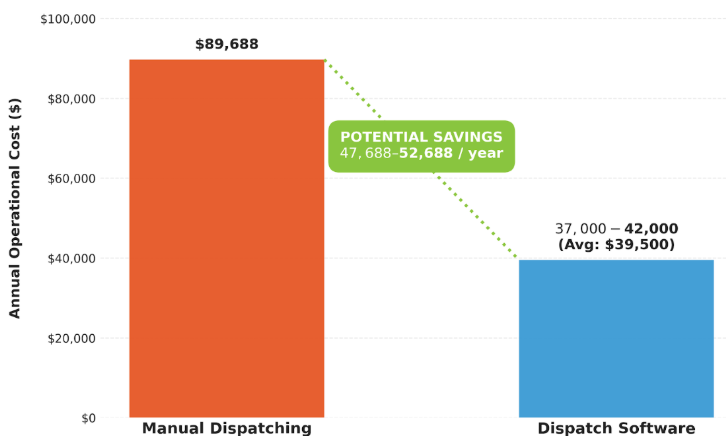
Here is how the numbers stack up annually for a typical growing fleet.
Annual Cost of Manual Dispatching
| Expense Category (Manual Process) | Estimated Annual Cost |
|---|---|
| Dispatcher Labor | $50,688 |
| Scheduling Errors & Lost Clients | $6,000 |
| Fuel Inefficiencies & Extra Mileage | $10,000 |
| Administrative Overhead | $8,000 |
| Missed Revenue (Inability to Scale) | $15,000 |
| Total Manual Cost | $89,688 |
Annual Cost with Dispatch Software
| Annual Cost with Dispatch Software | Estimated Annual Cost |
|---|---|
| Software Investment / Subscription | $3,000 – $8,000 |
| Reduced Labor Cost (Remaining Time) | $25,000 |
| Reduced Errors & Safeguarded Revenue | $1,500 |
| Optimized Routing (Lower Fuel Spend) | $4,000 |
| Streamlined Administration | $3,500 |
| Total Software-Assisted Cost | $37,000 – $42,000 |
Potential Annual Savings: $47,688 to $52,688+
While exact figures vary depending on your specific fleet size and industry, the direction remains identical across the board: as your operations grow, the financial return on transportation dispatch software scales right along with you.
Is Your Business Ready to Make the Switch?
If your current dispatch process limits your growth, stresses your team, or eats into your profit margins, it is time to look at automation.
The right fleet management software builds a permanent foundation for sustainable growth and removes the daily operational chaos that manual dispatching creates.
Ready to see what a tailored system can do for your fleet? Our team at Unique Software Development builds custom dispatch software solutions designed entirely around how your business actually works, not a rigid, generic template. Reach out to our team today to talk through what is possible for your operation.