

Your fleet can have thousands of data points and still leave you guessing which truck is actually costing you money. Fuel sits in one system, maintenance in another, telematics gives you a third version of the vehicle story, and the numbers do not always agree. So someone opens Excel, cleans the data, runs a few VLOOKUPs, and finally gets the answer. By then, the decision has already been waiting.
That is the part fleet management platforms promised to fix. Collecting data was never the real problem. This is where the relationship between transportation management systems and fleet operations becomes important. Especially when dispatch, routing, compliance, and vehicle data need to work together.
And if your team still has to export reports and stitch the numbers together before making that decision, there is a fair question worth asking: What exactly did the fleet management platform save you from doing?
That question shaped our comparison of 11 fleet management platforms in 2026. We looked beyond feature lists. We compared automation, integrations, AI, pricing, and reporting. Then we looked at the part vendors rarely put in the demo: how much manual work each platform actually removes from a fleet manager’s desk.
Feature Lists Don’t Break Down. Trucks Do.
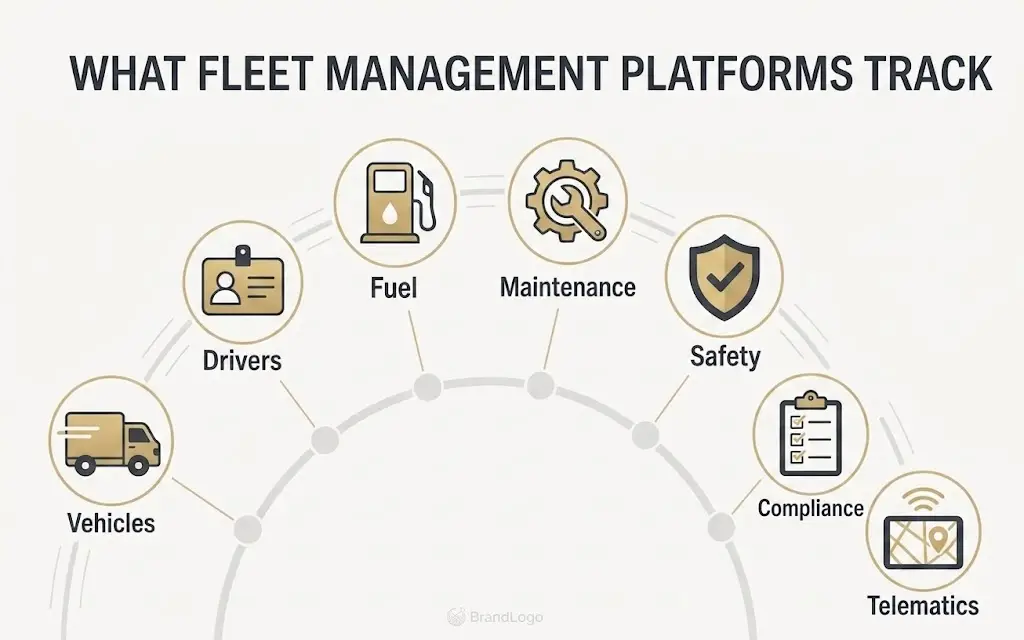
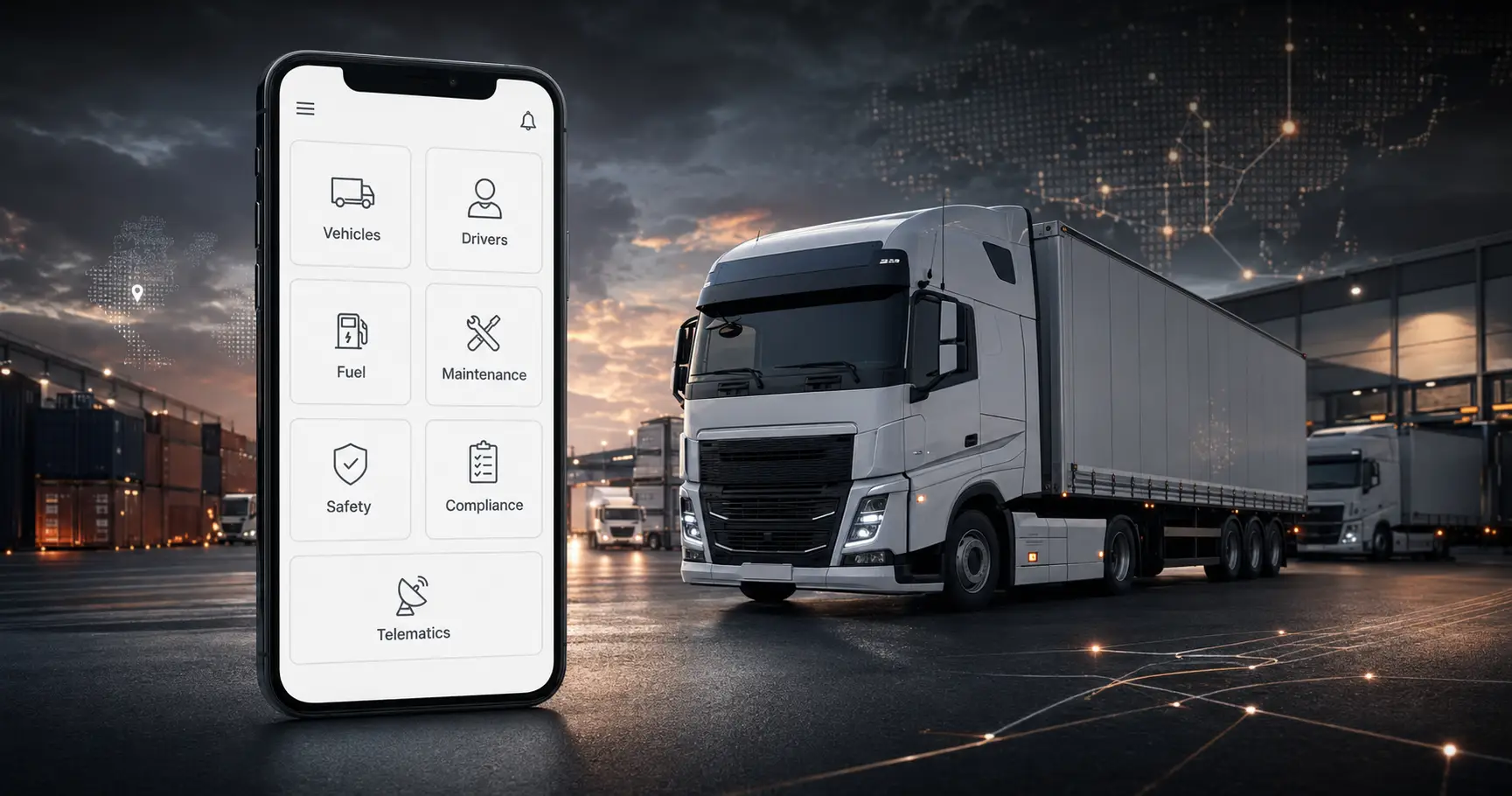
Every fleet management platform can show you vehicles, drivers, fuel, maintenance, safety, compliance, and telematics. That is the easy part. The real test comes when a manager needs one clear answer. Which trucks crossed $0.40 per mile in maintenance last quarter, and which vendor handled them? If the work orders, invoices, meters, and vendor records do not connect to the same asset, someone ends up rebuilding the answer in Excel.
Fleetio’s 2026 Fleet Benchmark Report, found that 30.8% of fleets still track data in spreadsheets, even across a sample covering 1.2 million vehicles. That points to a bigger problem, more data does not help when the systems cannot connect it. A fleet management software system should bring those pieces together around the way your operation actually works.
The 11 Best Fleet Management Platforms in 2026
A long feature list does not tell you how a platform will perform once your fleet starts using it every day. These capabilities also overlap with logistics software features for fleet operations, particularly when dispatch, routing, tracking, and vehicle data need to work as one workflow.
You get the idea where each platform can genuinely reduce management work, where its limitations appear, and which type of fleet is most likely to get value from it.
1. Opsima: Best for Mixed and Industrial Fleets
- Best for: Ports, terminals, quarries, mining, rail yards, heavy equipment
- Pricing: Quote-based, no public per-asset rate
- Top features: EquipmentOS operational data layer, capture from radio, WhatsApp and shift handovers
- Ideal fleet: Multi-site, multi-shift, mixed asset classes running on SAP, Maximo, Navis, JDE or AS400
- Main limitation: Not a van-fleet product; no ELD-first compliance stack, and no self-serve signup
Opsima does not replace your ERP. It captures field reality that never reaches it, radio calls, handover notes, informal asset names, then writes structured records back. Opsima reports a terminal deployment delivering roughly 5% more fleet availability. If nobody logs PMs, that is your real problem.
2. Samsara: Best for Connected Fleets and Real Time Telematics
- Best for: Mid to large mixed fleets wanting one system for tracking, safety and compliance
- Pricing: Roughly $27 to $33 per vehicle monthly, typically on 36-month terms
- Top features: Real-time GPS, AI dashcams, ELD, connected asset maintenance, Agent Studio
- Ideal fleet: 50 to 1,000+ vehicles with a safety or insurance problem to solve
- Main limitation: Contract length and prepay structure; module pricing climbs quickly
Samsara’s 2026 move matters more than another camera spec. Agent Studio, launched in open beta at Beyond 2026, lets managers build agents in plain language, with templates for weekly KPI reports and maintenance digests. If your team rebuilds that Monday report by hand, test this, not the dashcam reel.
The value of telematics becomes much clearer when it feeds the operational side of the fleet. GPS and telematics for fleet dispatch can turn vehicle location data into something dispatchers can actually use.
3. Fleetio: Best for Maintenance First Fleets
- Best for: Fleets losing money to downtime, not to lost vehicles
- Pricing: Entry plans start around $4 to $5 per vehicle monthly billed annually; higher tiers and add-ons cost more
- Top features: PM schedules, digital work orders, parts inventory, service history, vendor management, telematics integrations
- Ideal fleet: 25 to 500 mixed vehicles with in-house or outsourced shops
- Main limitation: No native GPS hardware, so telematics arrives through integration
Fleetio fits when your problem is knowing what happened to every vehicle, not where each one is now. Service history, meters, parts and lifecycle cost live in one record, exactly what repair-or-replace calls need. Clean your odometer and PM data first, because no dashboard repairs bad meter history.
4. Verizon Connect: Best for Large Commercial Fleets
- Best for: Enterprise fleet management across many sites and vehicle types
- Pricing: Custom quotes; third-party estimates commonly land near $20 to $40 per vehicle monthly, plus hardware and multi-year terms
- Top features: GPS, asset tracking, dispatch, compliance, reporting suite, wide integration ecosystem
- Ideal fleet: 250+ vehicles with dedicated fleet administrators
- Main limitation: Configuration and reporting depth demand internal time nobody budgets for
At what point does more fleet data create more management work? Around the scale where enterprise fleet management platforms shine, honestly. Reporting flexibility is real, and so is the setup burden. Name an owner for configuration and alert tuning before go-live, or you will drown in notifications.
5. Motive: Best for Trucking and Driver Safety
- Best for: DOT-regulated carriers where compliance and insurance risk drive the budget
- Pricing: Third-party sources cite roughly $25 to $50 per vehicle monthly with a 12-month minimum in many cases
- Top features: DOT-certified ELD, HOS, AI dashcams, driver coaching, IFTA and inspection workflows
- Ideal fleet: 10 to 500 trucks running interstate
- Main limitation: Maintenance and parts depth trails dedicated fleet maintenance software
Trucking buyers are not buying GPS. They buy a chain: ELD logs feed HOS accuracy, driving events feed coaching, coaching feeds CSA scores, CSA scores feed insurance renewal. Tracking alone does not fix the workflow. The important question is whether the platform connects those signals to scheduling, driver communication, documentation, and dispatch. These dispatch software features that connect drivers and fleet data matter when the operation gets busy.
6. Azuga: Best for Small and Mid Sized Fleets
- Best for: Service fleets of roughly 10 to 50 vehicles
- Pricing: Published tiers have historically ranged from about $15 to $35 per vehicle monthly depending on plan and term
- Top features: GPS tracking, driver scoring and rewards, dashcams, diagnostics, field service scheduling
- Ideal fleet: HVAC, plumbing, pest control, landscaping, local delivery
- Main limitation: Analytics and multi-site depth thin out as you scale past a few hundred assets
The question is not whether Azuga has enough features. It is whether a 30-van operation needs enterprise complexity. Setup runs fast, drivers adopt it, and the rewards angle shortens the harsh-braking argument. Add heavy equipment or a second depot and you will shop larger fleet management solutions.
7. EROAD: Best for Compliance Heavy Fleets
- Best for: Fleets where audits, HOS and tax reporting are the business risk
- Pricing: Quote-based, generally reported as reasonable relative to feature depth
- Top features: ELD, HOS, DVIR, driver logs, dashcams, asset trackers, fuel and road tax reporting
- Ideal fleet: Regulated carriers, government, utilities, weight-mile tax jurisdictions
- Main limitation: Reviewers frequently flag ELD log editing as manual work, and the driver app as fiddly
Compliance-first platforms earn their money when compliance is the exposure. EROAD keeps regulatory records clean and retrievable, which is exactly what you want two hours into an audit. The tradeoff is weaker pull on maintenance and workflow automation, so it often rides alongside a maintenance system rather than replacing one.
8. Geotab: Best for Fleet Data and Integrations
- Best for: Fleets with an analyst, an IT partner, or genuinely unusual reporting needs
- Pricing: Sold largely through resellers; device cost plus subscription, with Marketplace add-ons priced separately
- Top features: GO device, open platform, deep engine data, custom rules and reports, Geotab Ace AI assistant
- Ideal fleet: 100+ vehicles, mixed OEM telematics, EV programs, public sector
- Main limitation: Reseller-dependent experience; capability often arrives as another add-on to configure
Geotab is the strongest raw data layer on this list, and Ace lets managers query the fleet in plain language instead of building reports. That helps. It also means value depends on your appetite for assembly. Fleets wanting an out-of-the-box answer to every question will find themselves shopping the Marketplace.
9. RTA Fleet: Best for Municipal and In-House Shop Operations
- Best for: Public sector fleets, transit, and shops managing parts, labor and billing internally
- Pricing: Quote-based; third-party estimates typically sit in the upper range for comprehensive platforms
- Top features: Work orders, technician labor tracking, parts and inventory, motor pool, chargeback and lifecycle costing
- Ideal fleet: City, county, school district, transit and utility fleets with their own garages
- Main limitation: Interface and implementation feel heavier than modern SaaS competitors
If you bill departments for service and defend a maintenance budget to a council, shop-floor accounting matters more than a slick map. RTA handles technician time, parts consumption and chargebacks in real operational detail. Fleets without in-house shops will pay for depth they never touch.
10. AUTOsist: Best for Very Small Fleets and Record Keeping
- Best for: Fleets under about 25 assets that need reliable records, not analytics
- Pricing: Tiered and inexpensive; commonly cited around $25 per user monthly
- Top features: Maintenance logs, service reminders, inspections, fuel entries, document storage
- Ideal fleet: Small municipal departments, contractors, owner-operators
- Main limitation: Reviewers consistently cite limited integration with existing fleet management systems
Sometimes the honest answer is that a 12-truck operation does not need a fleet operations platform. It needs a dependable record of what was serviced, when, and by whom, accessible on a phone. AUTOsist does that cheaply. Expect manual entry and expect to export when you need cross-asset analysis.
11. Whip Around: Best for Inspection and DVIR Workflows
- Best for: Fleets where defects get spotted in the yard but never reach the shop
- Pricing: Free tier available; paid plans priced per asset, quote-based at scale
- Top features: Mobile digital inspections, custom checklists, photo evidence, defect-to-work-order flow, maintenance tracking
- Ideal fleet: Construction, waste, passenger transport, delivery, any DVIR-heavy operation
- Main limitation: GPS and telematics depth trails tracking-first fleet telematics platforms
The gap between a driver flagging a defect and a technician starting work is where downtime hides. Fleetio’s 2026 data puts the median time to start work at 31 minutes but the average at 6.7 days, and communication gaps top the list of causes. Whip Around attacks exactly that handoff. It will not replace your telematics.
Fleet Management Platforms Compared: Which One Fits Your Operation?
Skim this before you book demos. Comparing fleet management platforms side by side is faster than five sales calls, and it keeps you from buying enterprise fleet management for a 20-van problem.
| Platform | Strongest Capability | Ideal For | Main Limitation |
|---|---|---|---|
| Opsima | Capturing off-system field reality and writing it back to ERP | Mixed industrial, ports, mining, multi-site | Not built for van fleets or ELD-first needs |
| Samsara | Real-time telematics plus agentic automation | 50 to 1,000+ mixed fleets | Long contracts, module cost creep |
| Fleetio | Maintenance, work orders, lifecycle cost | Maintenance-led fleets, 25 to 500 assets | No native GPS hardware |
| Verizon Connect | Scale, dispatch, reporting breadth | 250+ vehicle commercial fleet management | Heavy configuration and admin load |
| Motive | ELD, HOS and driver safety chain | Regulated trucking, 10 to 500 trucks | Lighter maintenance and parts depth |
| Azuga | Fast deployment, driver engagement | 10 to 50 service vehicles | Limited depth at larger scale |
| EROAD | Audit-ready compliance and tax reporting | Regulated and public sector carriers | Manual ELD log editing, weaker workflow automation |
| Geotab | Open data, custom reporting, Ace AI queries | Data-mature fleets, 100+ vehicles | Reseller and add-on dependency |
| RTA Fleet | In-house shop, parts, labor, chargebacks | Municipal, transit, utility garages | Heavier legacy feel, longer implementation |
| AUTOsist | Simple, cheap, reliable records | Under 25 assets | Weak integrations, manual entry |
| Whip Around | Inspections and defect-to-repair handoff | DVIR-heavy operations | Thin telematics |
The Real Cost of Fleet Management Software
Subscription price is the number vendors of fleet operations software compete on. It is rarely the number that hurts. The better comparison is the operating impact, from labor saved to fuel, utilization, downtime, and billing efficiency. That is where transportation software ROI metrics become more useful than the monthly subscription alone.
- Hardware: commonly $100 to $300 per device, plus cameras and asset tags
- Installation: shop time, downtime, or a technician visit per unit
- Implementation: configuration, PM schedule setup, user roles, alert thresholds
- Data migration: cleaning odometer history, PM records, vendor lists, driver files
- Training: drivers, technicians, dispatchers, admins, each with different workflows
- Integrations: fuel cards, ERP, accounting, dispatch, sometimes billed per connection
- API access: occasionally tiered or capped
- User licenses: admin seats often priced separately from vehicles
- Contract commitments: multi-year terms, prepay, auto-renewal, early termination fees
- Downtime during rollout: two systems running in parallel for a quarter
- Vendor lock-in: the export you cannot get cleanly is a cost you pay at renewal
- Internal administration: somebody owns this platform now, permanently
A workable estimate:
3-Year Total Cost = Subscription + Hardware + Implementation + Integration + Training + Internal Administration
Run that math on two shortlisted fleet management platforms and the cheaper monthly rate often loses. Ask one more question before signing: can you export your full history, in usable form, without a support ticket? Data ownership only feels theoretical until you switch.
Where Off the Shelf Fleet Platforms Hit Their Limit
Off-the-shelf works, and for most fleets it works well. The fleet management platforms above solve standard problems competently. The limit appears when your operation stops looking standard, and no configuration screen covers the difference.
Mixed asset classes break it first. Excavators, straddle carriers, rentals returned in six weeks, and 40 vans do not share one data model. Add legacy ERP, multiple locations, and three step approval chains, and the problem quickly becomes integrating fleet data with ERP systems.
Then compliance turns industry-specific, dispatch rules turn proprietary, and fleet data scatters across systems that never talk. Managers reconcile it manually. At that point you are paying subscription fees to maintain the spreadsheet you were promised you could retire.
When Custom Fleet Management Software Makes More Sense
If an off-the-shelf platform handles your maintenance, telematics, reporting, and compliance without creating extra work, there is little reason to build your own.
The value of custom logistics software development appears when your operation needs more than standard features can provide. Instead of adapting your workflows to a vendor’s modules, you can build the system around how your teams actually work.
That can mean:
- Connecting telematics, maintenance, fuel, ERP, accounting, and dispatch in one workflow
- Automating actions such as maintenance alerts, work orders, approvals, and notifications
- Combining vehicle, fuel, repair, and utilization data for more accurate cost reporting
- Adding workflows and integrations specific to your fleet without paying for unrelated modules
- Expanding the system as you add vehicles, locations, or new operational requirements
The goal is not to build more software. It is to make the software you use handle more of the work your fleet already does.
How AI Is Changing Fleet Management Platforms in 2026
AI marketing across fleet management platforms runs well ahead of adoption, and the data says so plainly. A survey found that about 35% of fleets are researching AI, while only 5.6% use it broadly. Accuracy and reliability are the biggest concerns, cited by 50.8% of respondents. And what fleets want most is not another chatbot.
They want automated PM scheduling, predictive maintenance, and AI that fits into the way their teams work. That is where custom AI development starts to make sense, because the goal is to build AI around those specific workflows rather than force fleet operations into a generic tool.
Here are five workflows worth evaluating, with one question for each: does the AI stop at a recommendation, or does it trigger the next step?
Predictive maintenance
Telematics data flags an anomaly, the system predicts a failure window, then opens a work order with the right parts reserved. Prediction without the work order is just a notification.
Driver risk detection
Video and event data surface a pattern rather than a single hard brake, then generate a coaching session and track whether behavior changed. Pattern-level evidence is what ends the dispute with the driver.
Fuel anomaly detection
Transaction, mileage, and GPS data get compared, and mismatches get flagged for investigation. This is where fuel card reconciliation stops being a monthly spreadsheet job.
Automated compliance
Inspection and log data reveal a missing requirement; the platform assigns the corrective action and records completion. Compliance stops living inside unrelated operational reports.
Natural language fleet analytics
Ask which vehicles cost the most in maintenance this quarter and get the answer, not a report builder. Geotab Ace does this inside MyGeotab, and Samsara’s Agent Studio pushes further by letting teams build agents that act on the result.
Fleet Management Platform Comparison: Final Verdict
For most mixed commercial fleets between 50 and 1,000 vehicles, Samsara remains the strongest single choice in 2026. Mainly because its agentic tooling now closes the loop between insight and action instead of shipping another dashboard. Accept the contract terms with your eyes open.
If your operation is the exception, comparing fleet management platforms can stop being useful. Mixed assets, legacy ERP systems, custom approval chains, and scattered fleet data can turn every demo into a list of workarounds. Unique Software Development takes a different approach, building a vehicle fleet management platform around the way your operation already works. Your existing telematics, maintenance, fuel, and ERP data can stay connected without forcing your team into modules they never use.