

Complex tasks become much easier to manage when you can actually see what is happening inside them. That is not always easy in a 3PL, where warehousing, picking and packing, returns, shipping, inventory, and client requests are all moving at once.
Ready-made 3PL platforms such as ShipHero, Extensiv, and Hopstack can bring much of this work into one place. They are faster and more budget-friendly than building a system from scratch, but their workflows still follow a standard way of working. That can become difficult to manage when clients come with different requirements.
When those differences start piling up, custom 3PL software development becomes an option worth considering. A custom logistics software development team can build the system around how your operation actually runs while connecting the WMS, ERP, ecommerce platforms, carriers, and other systems already in use.
This guide covers core features, billing, integrations, development costs, and the practical decision of buying, extending, or building 3PL software.
What Is 3PL Software Development?
3PL software development means building software around how a third-party logistics provider manages multiple clients, warehouses, orders, inventory, shipping, and billing. One warehouse may serve several brands at once, but each brand still needs its own stock, orders, rates, users, and reports.
It is like an apartment building. Everyone shares the walls, elevator, and front desk, but nobody should open a neighbor’s mailbox. A 3PL works the same way. The warehouse, staff, and systems can be shared, while each client’s inventory, orders, pricing, workflows, and data stay separate.
The software connects these moving parts so a 3PL can manage daily warehouse work, client requirements, shipping, and billing without treating every client as a separate operation.
How 3PL Software Works
Follow one order through the building. A shopper buys a jacket on a Shopify store. The order lands in your system. The software checks the address and the SKU, then reserves the jacket from the right bin. A picker grabs it. A packer boxes it. The system buys the best label for the delivery promise, sends tracking back to the brand, and records every billable touch for the month-end invoice.
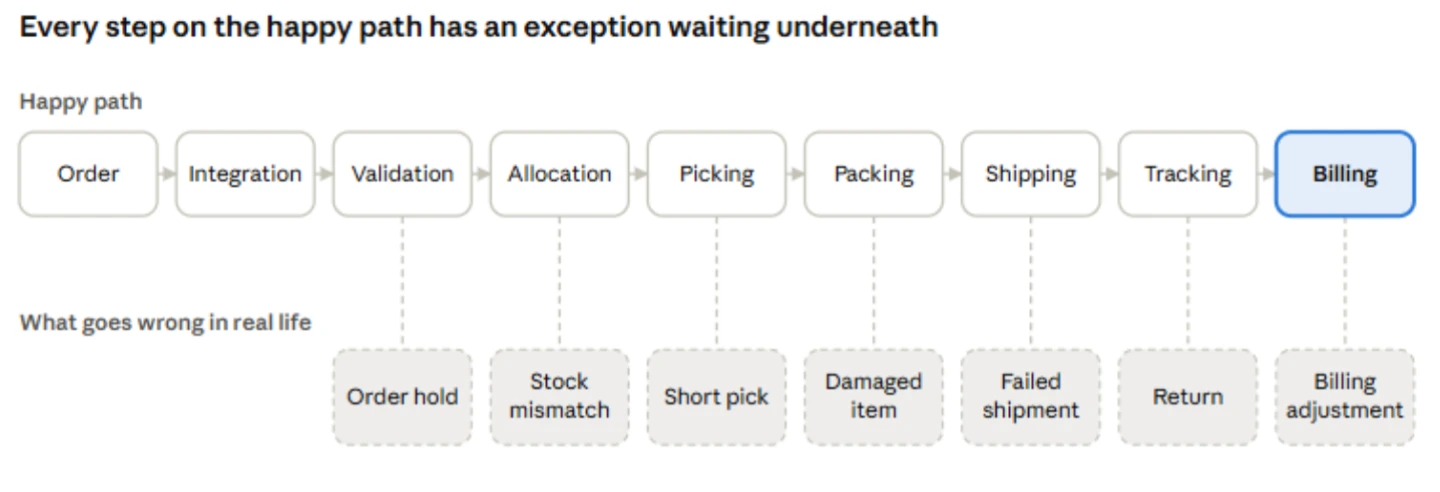
That is the happy path. On a calm Tuesday, it runs itself. Real warehouses rarely stay calm. The bin shows three jackets and holds two. A box gets crushed. A carrier API times out at 4 p.m. on the busiest day of the year. Each exception needs a rule: who gets alerted, what gets held, and how the charge changes. Strong 3PL software development spends most of its effort on those exceptions.
Key Features to Build Into 3PL Software
Your clients judge you by your technology now. In the 2026 Third-Party Logistics Study, 90% of shippers ranked technology among the most critical factors when choosing a 3PL.
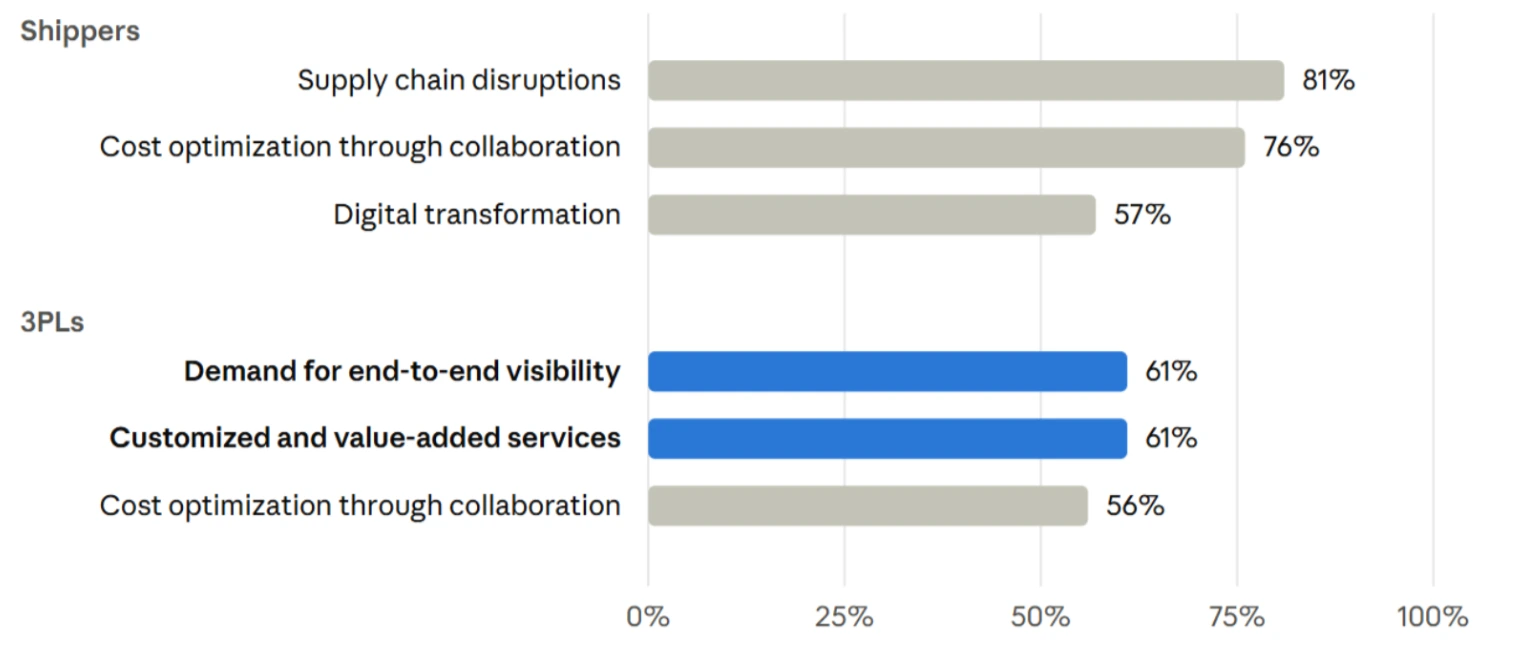
Visibility and value-added services both live or die in your software. Here is the feature set that delivers them. Billing gets its own section below, because that’s where most 3PL management software falls short.
Multi-Client & Account Management
Each client gets its own products, rules, users, rate card, and integrations, all inside one operation. Onboarding speed matters more than most leaders expect. A new client who waits six weeks to go live starts the relationship annoyed.
Inventory Management
Inventory control is the heart of a 3PL. Good 3PL inventory management software tracks every unit from the dock door to the shipping lane. It handles receiving against an ASN, putaway, bin locations, lot and expiry dates, cycle counts, and replenishment. The right WMS software requirements keep those movements accurate as inventory moves through the warehouse.
Order Management
Orders arrive from Shopify, Amazon, Walmart, and EDI feeds. The software batches similar orders, applies holds, and sets priority. A wholesale pallet order to Target and a single-item DTC order need very different handling.
Warehouse Operations
This is the 3PL warehouse management system layer: pick paths, packing stations, kitting, labeling, palletizing, and FBA prep. Scanning hardware matters too. Many operators find iPads with Bluetooth scanners easier to train on than old RF guns, especially with the right logistics mobile app.
Shipping & Carrier Management
The system compares UPS, FedEx, USPS, and regional carriers for every box, then picks the best rate. Small savings per parcel add up fast across thousands of orders. Good shipping management software also handles carrier rules, labels, pickups, and tracking.
Returns & Reverse Logistics
A return is two events at once: an inventory event and a billable event. The software logs the reason, inspects the item, and decides whether it goes back on the shelf.
Reporting & Client Portal
The client portal is your 24/7 account manager. Brands check stock, upload products, send ASNs, and pull reports without emailing your team at midnight.
3PL Billing Software: Turning Warehouse Activity Into Billable Events
Billing is where 3PL margins quietly leak. A pallet sits an extra week, and nobody charges for it. A kitting job takes twice as long and gets billed at the standard rate. Ten small misses a month become a real number by December.
Good 3PL billing software works like a taxi meter. It runs in the background and counts every billable move as it happens. Its real job: translate warehouse events into charges according to each client’s contract.
The events it has to catch:
- Storage by pallet, bin, shelf, or cubic foot
- Receiving per pallet, carton, or unit
- Pick and pack per order and per extra item
- Kitting, labeling, and FBA prep
- Shipping, including any markup on labels
- Accessorials such as rush orders, special packaging, and after-hours work
- Minimum charges for small clients
On top of that, finance needs client-specific rate cards, adjustments, invoice backup a client can audit line by line, and month-end reconciliation.
One 3PL owner praised ShipHero’s operations but called out weak client invoicing and invoice backup. Cash-flow protection still needs manual process and oversight. When you scope 3PL software development, put billing at the top of the list. Once every event is captured correctly, invoice automation software can do the rest.
How Much Does 3PL Software Development Cost?
Pricing a 3PL platform is like pricing a house. A two-bedroom starter and a five-building campus both need a foundation, plumbing, and wiring. The size, the finishes, and the number of connections decide the bill.
| Scope | Estimated Cost | Typical Timeline | What You Get |
|---|---|---|---|
| MVP | USD 60K–120K | 4–6 months | One warehouse, inventory and orders, mobile scanning, one carrier connection, basic billing |
| Mid-level | USD 120K–250K | 6–10 months | Client portal, rate-card billing, ecommerce and accounting integrations |
| Advanced | USD 250K–400K | 10–18 months | Multiple warehouses, EDI, automation, labor tracking |
| Enterprise | USD 400K+ | 12–24+ months | Multiple business units, ERP integration, high availability, data migration |
Budget for the years after launch too. Keeping your integrations healthy requires a dedicated developer, and that’s a real line item. The US Bureau of Labor Statistics reports a median software developer wage of $135,980 per year.
Your custom software development process and cost also depend on what happens before development starts. Undocumented client integrations, EDI testing, and messy legacy data can stretch both cost and timelines. Launching with one client in one building first keeps the project manageable and shows value early.
How 3PL Software Connects Clients, Carriers & ERPs
Every client plugs in differently. One sells on Shopify. Another runs NetSuite. A big-box retailer demands EDI. A small brand still emails a spreadsheet every Monday. One 3PL operator on Reddit said some large customers even use a different format for each division.
Your integrations need to cover:
- Sales channels: Shopify, Amazon, Walmart, WooCommerce, BigCommerce. Our guide to custom ecommerce software development explains how these platforms share order data.
- ERPs and accounting: NetSuite, SAP Business One, Microsoft Dynamics, QuickBooks. See how a WMS and ERP integration keeps stock and finance in step.
- Carriers: UPS, FedEx, USPS, DHL, and multi-carrier tools.
- EDI: retail partners send warehouse orders (940), expect shipping confirmations (945) and inventory updates (846), and ask for advance ship notices (856).
- Everything else: APIs, webhooks, CSV files, XML, and nightly SFTP drops.
This is where most of the effort goes. One Reddit user described spending about 8 months and $200,000 on an order-routing layer that broke every time a partner changed its system.
Build, Buy, or Extend 3PL Software?
Most advice gives you two doors: build or buy. Real 3PLs have three. The better question is what to buy, what to extend, and what is worth building yourself.
| Approach | Best When | Watch Out For |
|---|---|---|
| Buy | Your workflows are standard, the integrations you need already exist, and you need to go live fast | Per-client and per-store fees, plus a services ticket for every change |
| Extend | Your WMS runs the floor well but misses billing, the client portal, integrations, or reporting | Keeping custom modules in step with vendor updates |
| Build | Your operating model itself is your competitive edge | Upfront development cost and the team needed to maintain it |
Extend is the option most leaders overlook. When a house is solid, and only the kitchen is too small, you renovate the kitchen and keep the house. The gaps that stay manual after go-live are usually the same three: billing exceptions, client-specific reporting, and onboarding new clients. Custom 3PL software that fills exactly those gaps often pays back faster than a full rebuild.
Building from scratch is a bigger commitment. One Reddit operator running about 800,000 sq ft across five sites received a quote of roughly $400K for a custom platform, plus the cost of hiring a backend developer to run it. Another founder built a homegrown system and watched it fall behind on client requests, new integrations, and bug fixes. Custom software is an asset, and it needs an owner.
Common Challenges in 3PL Software Development
The hardest part is keeping systems in sync when something goes wrong. Researchers behind the 31st Annual Third-Party Logistics Study found that data quality and legacy integration remain the top barriers to scaling AI in logistics. The same two problems slow down every 3PL platform project.
- Fragmented integrations. Every client adds a new connection and a new way to fail.
- Inventory accuracy. One wrong count spreads into wrong orders, wrong invoices, and an angry client.
- Billing accuracy. Small misses repeat every month until someone audits them.
- Client-specific workflows. Each exception you agree to in a sales call becomes code someone maintains.
- Legacy systems. Old tools with no API still hold critical data. Our guide on how to modernize legacy systems covers safer ways to bridge them.
- Floor adoption. If scanning slows a picker down, pickers find a workaround.
- Peak loads. Volume can triple in November. Test for it in September.
- Offline scanning. Devices must keep working in the dead zone by the freezer.
The Bottom Line
Off-the-shelf logistics software is a quick way to get a 3PL up and running. But as you take on more clients, the gaps start showing. One client needs a different workflow, another needs a different report, and someone on the team ends up finding a workaround for both. Add custom changes, new integrations, and monthly updates, and the software can start costing more in team time than it saves.
If that sounds familiar, it may be time to look at custom 3PL software development. Unique Software Development builds 3PL systems around the workflows, billing rules, integrations, and warehouse operations your team actually needs.